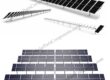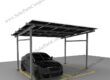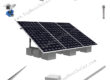
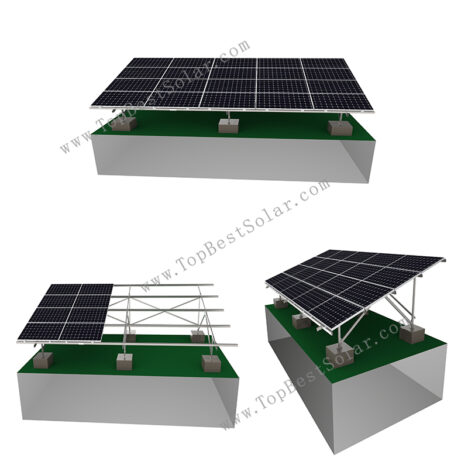
ZAM Steel Ground Structure Systems Refurbishment
Installation Site: Open area
Material: S350GD-ZM,SUS304,AL6005-T5
Tilt Angle: 0° to 60°
PV Module: Framed, Frameless
PV Orientation: Portrait, Landscape
Wind Load: 60 m/s
Snow Load: 3.6 KN/M2
Building Height:Up to 20m
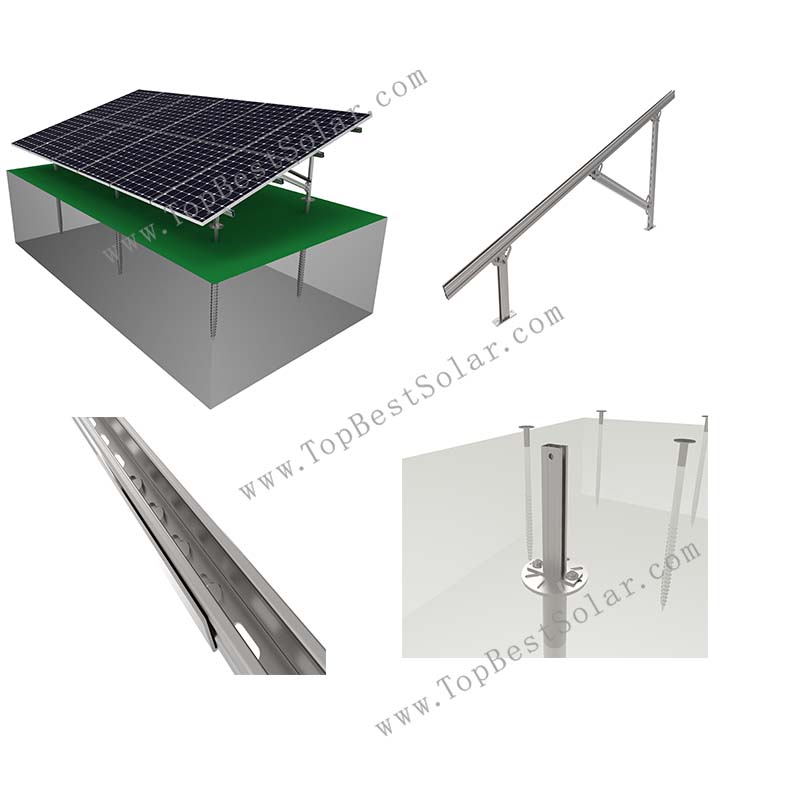
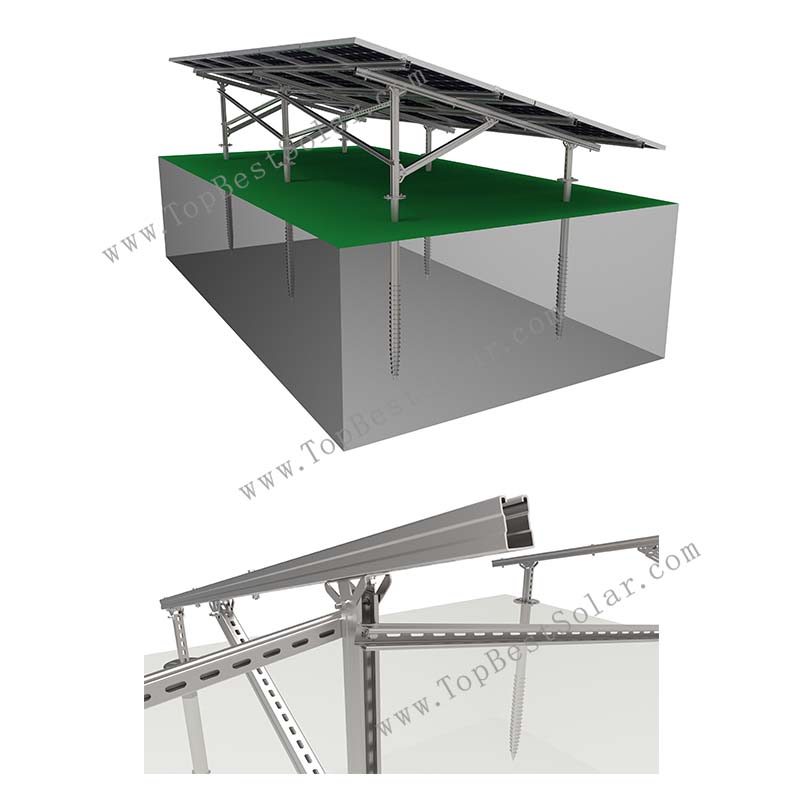
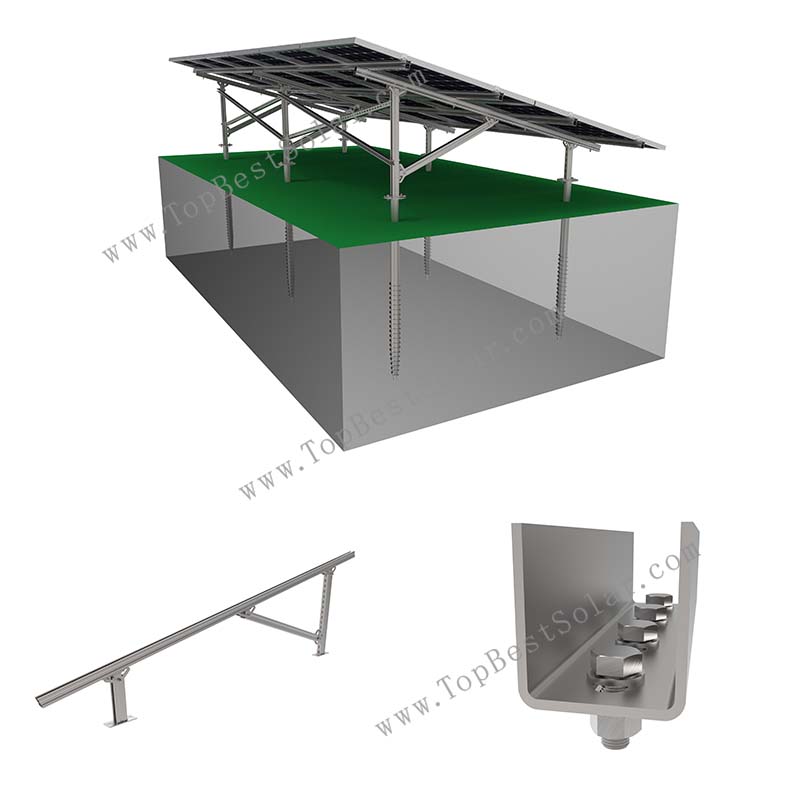
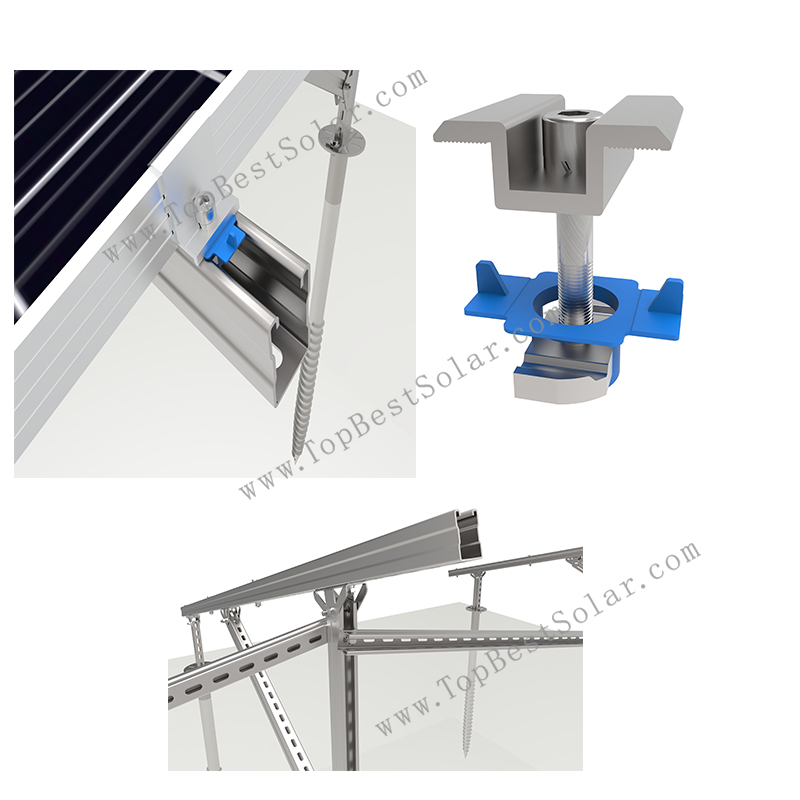
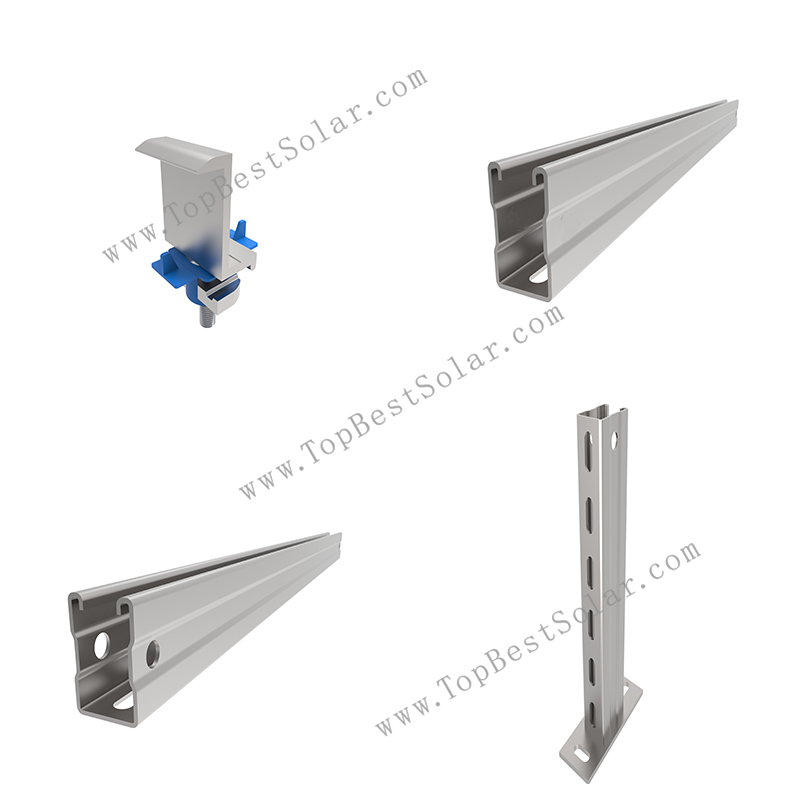
Proper installation of ZAM Steel Ground Mounting requires the following professional tools to guarantee structural safety and installation accuracy:
Pile driver
Wrench
Electric Screwdriver Wrench
Tape
Allen Key Wrench
M8 T Wrench
Line
Here are the installation steps for ZAM Steel Ground Mounting:
1. Drive piles at intervals as per the drawing, 200mm above the ground, and align them with the horizontal reference line.
2. Pre-assembled bracket.
3. Secure the bracket to the ground pile using M12*40 bolts.
4. Install other brackets.
5. Install the back bracing using M10*30 bolt assemblies.
6. Install the rails.
7. Use mid clamps and end clamps to secure the panels,installation completed.
What is the difference between ZAM steel and hot‑dip galvanized steel for solar ground mounting?
Q: What is the difference between ZAM steel and hot‑dip galvanized steel for solar ground mounting?
A: ZAM (Zn‑Al‑Mg alloy‑coated steel) adds aluminium and magnesium to the zinc coating, delivering 3‑10 times better salt‑spray corrosion performance compared with conventional hot‑dip galvanized (HDG) steel. ZAM features cut‑edge self‑healing: scratches, drill holes and cut edges form a protective passive film without touch‑up paint, while HDG bare edges will rust and require zinc‑rich paint treatment. HDG has lower initial material cost and works well for inland mild‑corrosion sites. ZAM is preferred for coastal, agricultural and moderate‑industrial environments, lowering long‑term OPEX by reducing re‑painting and component replacement over the 25‑year project lifecycle.
Q: Can I retrofit existing old ground‑mount solar racks with ZAM steel components?
A: Yes. ZAM steel rails, clamps and fasteners are fully compatible for retrofitting and refurbishment of existing ground‑mount solar systems. Two typical approaches are available: partial retrofit by replacing only corroded parts while re‑using functional original foundations, or full refurbishment with complete structure upgrade. Please conduct on‑site structural inspection first to verify foundation integrity, soil condition and load capacity before swapping components. It is a cost‑effective solution for aging solar farms to extend service life without full teardown and reconstruction.
Q: Does scratch or cut surface on ZAM steel require anti‑corrosion touch‑up paint?
A: Under normal atmospheric outdoor conditions, minor scratches, drill holes and cutting edges of ZAM steel rely on its built‑in self‑healing alloy reaction and do not require mandatory anti‑corrosion touch‑up paint. For extremely aggressive environments such as heavy chemical industrial zones, continuous immersion conditions or large weld‑burn zones, applying zinc‑rich paint is recommended as an optional extra protective measure to maximise long‑term performance.
Q: What soil conditions are not suitable for ground screw foundation option?
A: Ground screws are not recommended for solid bedrock, large buried boulders, extremely hard compacted hardpan, and continuously saturated ultra‑soft silt with insufficient pull‑out resistance. In these scenarios ground screws cannot achieve required torque and anchoring capacity. For such sites, concrete block foundations are the more reliable alternative. Always carry out geotechnical soil survey before finalising foundation selection for utility‑scale projects.
Q: Can this system support new large‑format bifacial PV modules?
A: Yes. This ZAM steel ground‑mount system is engineered to fit modern large‑size bifacial solar panels. Adjustable rail span, flexible clamping range and upgraded load‑bearing capacity support high‑power bifacial modules in both portrait and landscape mounting orientations. Please provide module dimensions, weight and local wind/snow load data for custom structural calculation to guarantee project safety.
Q: What is the lead‑time for bulk project orders ?
A: For bulk project orders, lead‑time depends on order volume, material availability and production schedule; typical bulk production lead‑time ranges from 30‑45 working days after deposit receipt and technical drawing confirmation. We suggest sharing project schedule early for accurate lead‑time planning.
- Description
-
- Installation Instruction
-
Proper installation of ZAM Steel Ground Mounting requires the following professional tools to guarantee structural safety and installation accuracy:
Pile driver
Wrench
Electric Screwdriver Wrench
Tape
Allen Key Wrench
M8 T Wrench
Line
Here are the installation steps for ZAM Steel Ground Mounting:
1. Drive piles at intervals as per the drawing, 200mm above the ground, and align them with the horizontal reference line.
2. Pre-assembled bracket.
3. Secure the bracket to the ground pile using M12*40 bolts.
4. Install other brackets.
5. Install the back bracing using M10*30 bolt assemblies.
6. Install the rails.
7. Use mid clamps and end clamps to secure the panels,installation completed.
- FAQ
-
What is the difference between ZAM steel and hot‑dip galvanized steel for solar ground mounting?
Q: What is the difference between ZAM steel and hot‑dip galvanized steel for solar ground mounting?
A: ZAM (Zn‑Al‑Mg alloy‑coated steel) adds aluminium and magnesium to the zinc coating, delivering 3‑10 times better salt‑spray corrosion performance compared with conventional hot‑dip galvanized (HDG) steel. ZAM features cut‑edge self‑healing: scratches, drill holes and cut edges form a protective passive film without touch‑up paint, while HDG bare edges will rust and require zinc‑rich paint treatment. HDG has lower initial material cost and works well for inland mild‑corrosion sites. ZAM is preferred for coastal, agricultural and moderate‑industrial environments, lowering long‑term OPEX by reducing re‑painting and component replacement over the 25‑year project lifecycle.
Q: Can I retrofit existing old ground‑mount solar racks with ZAM steel components?
A: Yes. ZAM steel rails, clamps and fasteners are fully compatible for retrofitting and refurbishment of existing ground‑mount solar systems. Two typical approaches are available: partial retrofit by replacing only corroded parts while re‑using functional original foundations, or full refurbishment with complete structure upgrade. Please conduct on‑site structural inspection first to verify foundation integrity, soil condition and load capacity before swapping components. It is a cost‑effective solution for aging solar farms to extend service life without full teardown and reconstruction.
Q: Does scratch or cut surface on ZAM steel require anti‑corrosion touch‑up paint?
A: Under normal atmospheric outdoor conditions, minor scratches, drill holes and cutting edges of ZAM steel rely on its built‑in self‑healing alloy reaction and do not require mandatory anti‑corrosion touch‑up paint. For extremely aggressive environments such as heavy chemical industrial zones, continuous immersion conditions or large weld‑burn zones, applying zinc‑rich paint is recommended as an optional extra protective measure to maximise long‑term performance.
Q: What soil conditions are not suitable for ground screw foundation option?
A: Ground screws are not recommended for solid bedrock, large buried boulders, extremely hard compacted hardpan, and continuously saturated ultra‑soft silt with insufficient pull‑out resistance. In these scenarios ground screws cannot achieve required torque and anchoring capacity. For such sites, concrete block foundations are the more reliable alternative. Always carry out geotechnical soil survey before finalising foundation selection for utility‑scale projects.
Q: Can this system support new large‑format bifacial PV modules?
A: Yes. This ZAM steel ground‑mount system is engineered to fit modern large‑size bifacial solar panels. Adjustable rail span, flexible clamping range and upgraded load‑bearing capacity support high‑power bifacial modules in both portrait and landscape mounting orientations. Please provide module dimensions, weight and local wind/snow load data for custom structural calculation to guarantee project safety.
Q: What is the lead‑time for bulk project orders ?
A: For bulk project orders, lead‑time depends on order volume, material availability and production schedule; typical bulk production lead‑time ranges from 30‑45 working days after deposit receipt and technical drawing confirmation. We suggest sharing project schedule early for accurate lead‑time planning.
- Leave Message
-