
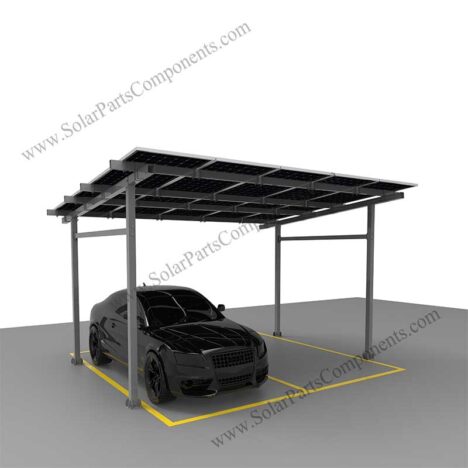
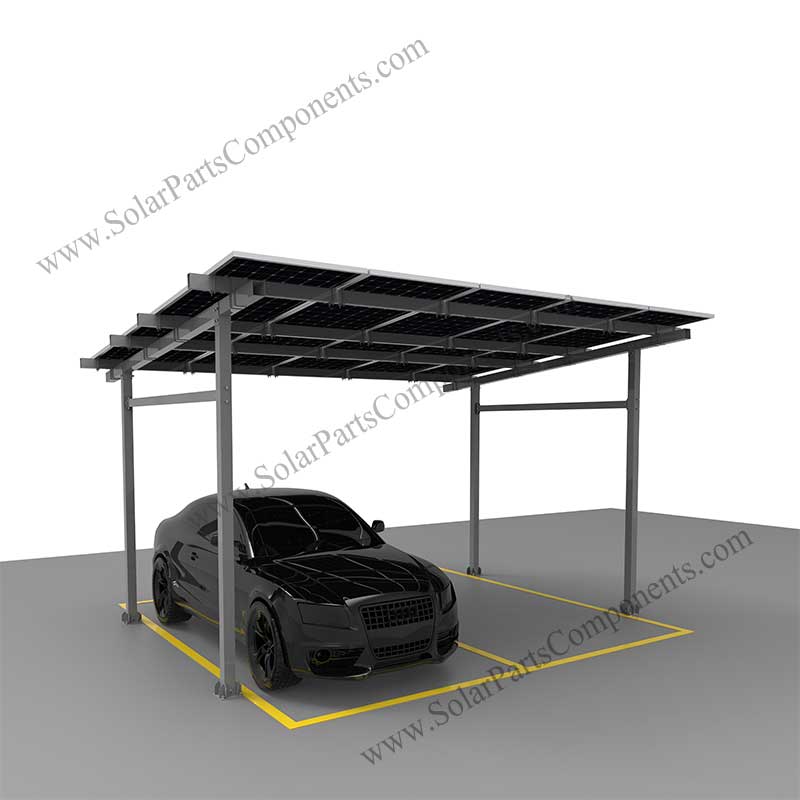
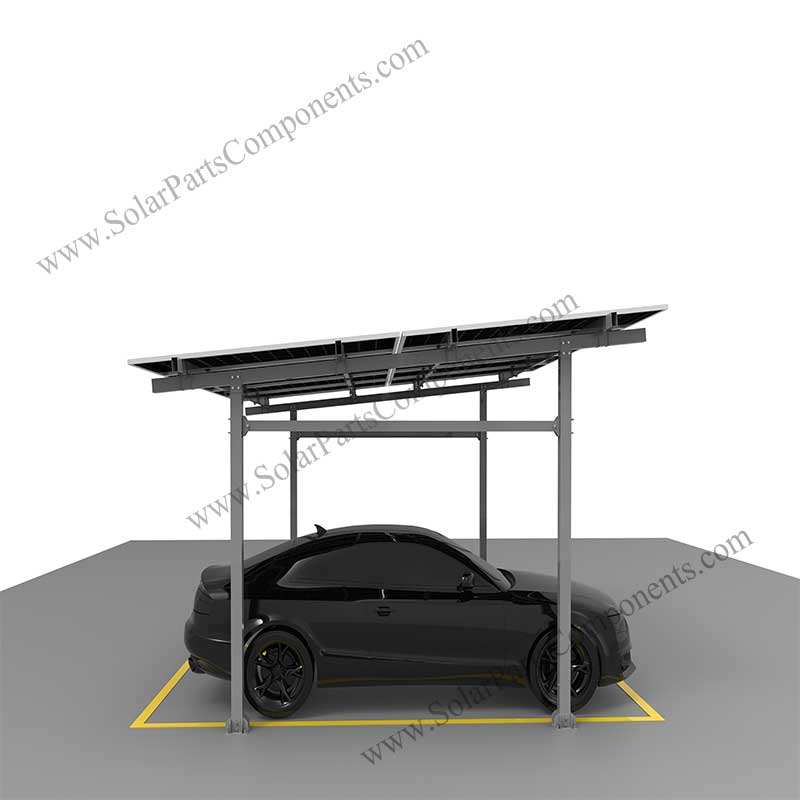
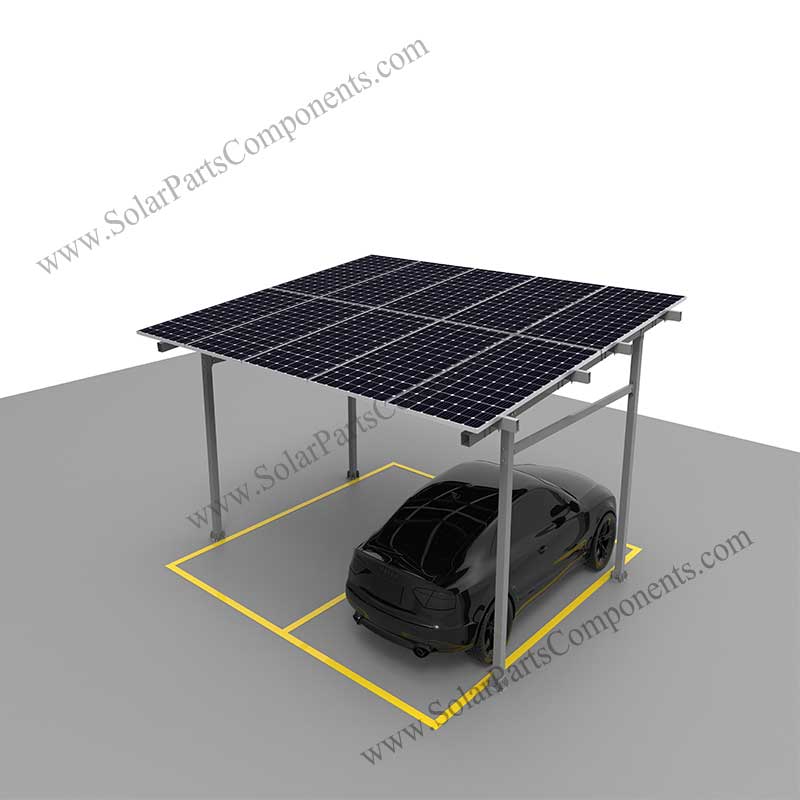
Solar Parking Canopy
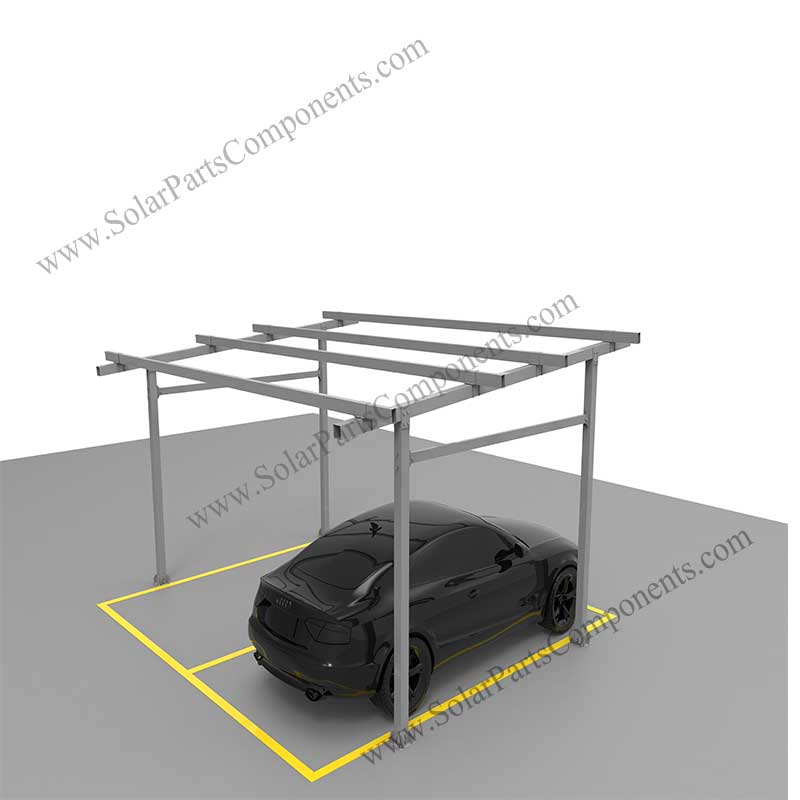
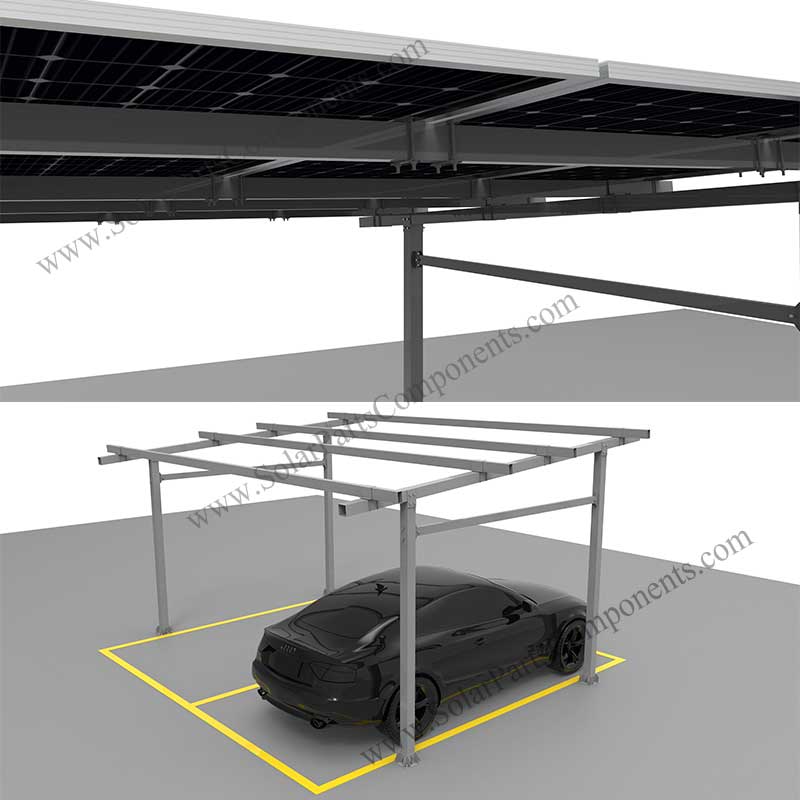
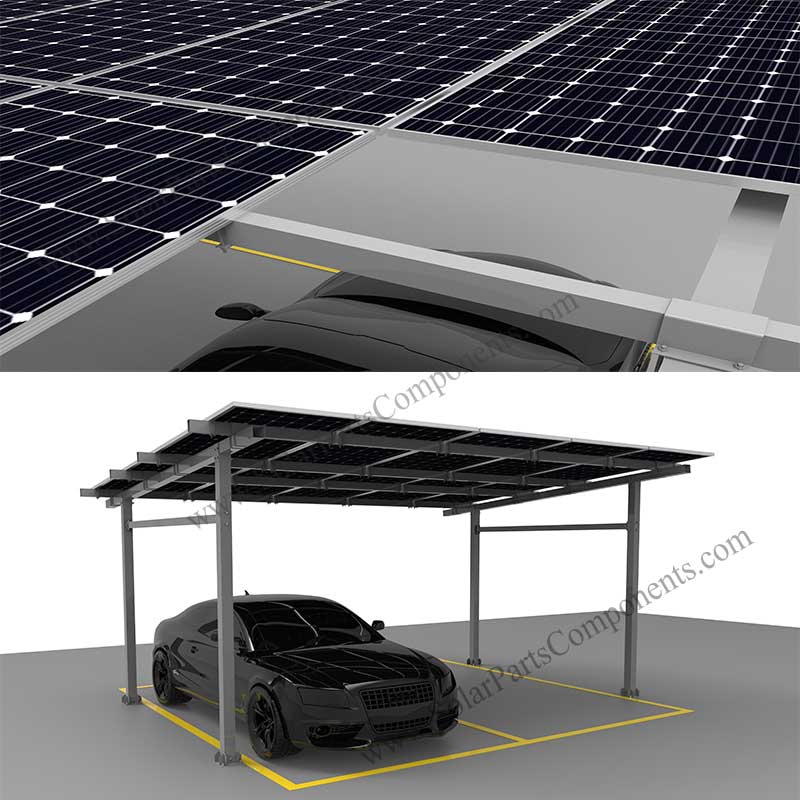
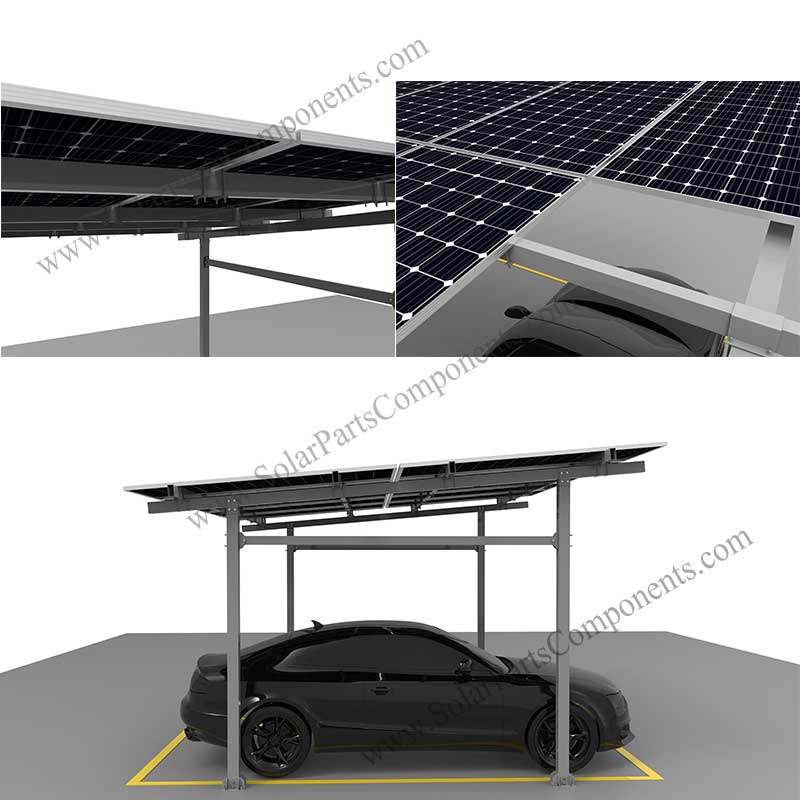
Model: SPC-CP-ZM
Installation Site: Ground/ Flat Roof
Material: ZAM
Tilt Angle: 0° to 45°
PV Module: Framed, Frameless
PV Orientation: Portrait, Landscape
Wind Load: 60 m/s
Snow Load: 1.4 KN/M2
Product Description:
The quiet problem under every carport.
A Solar Parking Canopy leads a harder life than almost any other steel structure. It stands outdoors, fully exposed, for 25 years. It is drilled and cut during fabrication. Vehicles bring in road salt and moisture. Coastal sites add salt air; industrial sites add corrosive fallout. And unlike a rooftop array, it lives at eye level — every rust stain is a public announcement.
Traditional hot-dip galvanizing has carried the industry this far, and it still works. But the demands on modern carport structures — longer spans, thinner sections, coastal and island projects, 25-to-30-year power purchase agreements — have outgrown what a pure zinc coating was designed to do.
This is where zinc-aluminum-magnesium coated steel, commonly abbreviated ZAM, changes the economics of a Solar Parking Canopy. At TopBest Solar, it has become our default recommendation for carport projects — and the reason is arithmetic, not marketing.
What ZAM actually is
ZAM is a continuously applied metal coating of zinc reinforced with approximately 11% aluminum and 3% magnesium. The three elements work together in a way pure zinc cannot:
Aluminum forms a dense, stable barrier layer that slows the corrosion reaction itself;
Magnesium triggers the formation of protective, water-insoluble corrosion products that spread across exposed steel;
Zinc continues to provide sacrificial, galvanic protection to the base steel.
The measurable result: in neutral salt-spray testing, ZAM coatings routinely achieve many times the corrosion resistance of conventional hot-dip galvanizing at the same — or thinner — coating thickness.
The three properties that matter specifically to carports
-
Self-healing cut edges
This is the property that decides real-world carport performance. A Solar Parking Canopy is not a stamped consumer product — it is cut to length, drilled, notched and punched. Every cut edge is bare steel.
With ordinary zinc coatings, those edges are the first failure points. With ZAM, the magnesium-driven protective film migrates across the exposed cut, effectively sealing the edge on its own. Sections, drilled holes and laser-cut details keep their protection without field touch-up — which matters doubly on a bolt-together modular system assembled on a live parking deck, where welding and repainting are simply not options.
-
Coastal and industrial projects become viable
For years, the standard answer to salt-air sites was “thicker galvanizing, or duplex systems, or stainless — pick your premium.” ZAM shifts the curve. Projects that once required costly coating upgrades can now be engineered with ZAM steel as a single, standard solution — with the corrosion margin to match a 25-to-30-year canopy life in marine and high-humidity environments.
-
Lighter sections, lower total cost
Because ZAM achieves its corrosion performance in a thinner coating, it is applied to high-strength cold-formed sections with excellent formability — no flaking during bending and roll-forming, no wasted coating weight. Thinner, stronger sections mean less steel per square meter of Solar Parking Canopy, which lowers material cost, freight and installation labor simultaneously.
ZAM versus the alternatives, honestly
| Pre-galvanized | Hot-dip galvanized (after fabrication) | ZAM (TopBest carport standard) | |
| Cut-edge protection | Poor — edges exposed | Good, but touch-up needed on cuts | Excellent — self-healing |
| Salt-spray life | Baseline | ~2–3× pre-galv | Many multiples of pre-galv |
| Formability | Good | Coating can crack at bends | Excellent, no flaking |
| Field fabrication | Not recommended | Possible with touch-up | Cuts and drills stay protected |
| Best fit | Indoor / dry | General outdoor | Coastal, road-salt, industrial, 25-yr canopies |
We still supply hot-dip galvanized structures where specs demand it. But for a Solar Parking Canopy, ZAM is usually the better lifecycle decision, and we say so in writing.
Structure and coating, engineered as one system
A coating is only as good as the structure wearing it. Every TopBest Solar Parking Canopy is delivered as a complete, single-responsibility package:
Site-specific engineering — wind, snow and seismic calculations to ASCE 7 / AS-NZS 1170 / EN 1991, with the full calculation package and drawings issued per project
Modular bolt-together design on the 2.7 m parking grid; single-row cantilever, double-row T-column and V-column layouts from one system
Integrated water management — structural gutter profiles with EPDM sealing, optional full-waterproof roof configuration
EV-ready detailing — cable trays, combiner and charger mounts built into the frame, no drilling into protected steel on site
Traceable materials — mill certificates and coating reports with every shipment
Standard projects: engineering package in 5 working days, production in 25 days. OEM and custom-spec manufacturing under NDA is available for EPC partners and brand owners.
Where ZAM carports earn their keep fastest
Coastal resorts, ports and island microgrids
Highway service areas and parking structures exposed to de-icing salt
Chemical and industrial parks with corrosive atmospheres
Any project under a 25-year+ PPA or performance warranty, where coating life must match contract life
Send us your site plan — in any format
You already own the land and the grid connection. Turning a hot parking lot into a 25-year Solar Parking Canopy asset starts with a structural concept, and that conversation costs nothing.
Visit www.topbestsolar.com or send your parking layout, project location and target capacity — even a hand sketch works. You will receive a preliminary structural concept, a ZAM versus galvanized coating recommendation, and a bill-of-materials-level quotation.
TopBest Solar — Solar Parking Canopy structures engineered to outlast the warranty.
What Is a Solar Parking Canopy?
A solar parking canopy (also called a solar carport) is a steel-framed overhead structure installed over a parking lot or parking deck that supports photovoltaic (PV) modules on its roof while providing shaded — and in many cases rain-protected — parking underneath. It performs two jobs at once: it generates on-site solar electricity from the same footprint that’s already paved, and it shields parked vehicles from sun, snow and rain.
A solar parking canopy is fundamentally different from a rooftop solar array, even when both sit above a structure. The canopy stands at ground or low level on its own columns, fully exposed to weather for25–30 years, and lives at eye level where every corrosion mark is visible. That is why modern carport-grade canopies — such as TopBest Solar’s SPC-CP-ZM series — are built on a purpose-engineered substructure rather than adapted rooftop racking.
Key characteristics of a commercial-grade solar parking canopy:
- Material: ZAM (zinc-aluminum-magnesium) coated steel for cut-edge self-healing corrosion protection, rather than conventional hot-dip galvanizing.
- Installation site: Ground-mounted or flat-roof parking decks.
- Tilt angle: 0° to 45°, configurable to project latitude and layout.
- PV module compatibility: Both framed and frameless modules.
- PV orientation: Portrait or landscape.
- Structural capacity: Wind load up to 60 m/s and snow load of 1.4 kN/m², engineered per ASCE 7 / AS-NZS 1170 / EN 1991.
- Modular layout: Built on the standard 2.7 m parking grid, with single-row cantilever, double-row T-column and V-column configurations from one system.
- EV-ready: Cable trays, combiner boxes and charger mounts are integrated into the frame at fabrication, with no on-site drilling into protected steel.
In short, a solar parking canopy turns existing paved parking into a dual-use asset — a power plant and a sheltered parking structure — without consuming additional land. It is the preferred solution wherever land is scarce, electricity is expensive, and the project life needs to match a 25-year PPA or performance warranty.
Can a solar canopy include EV charging or battery storage?
Question: Can a solar parking canopy include EV charging or battery storage?
Short answer: Yes — and in the case of TopBest Solar’s ZAM-coated Solar Parking Canopy, EV charging is engineered in from the start as “EV-ready detailing.” Battery storage is a complementary add-on that pairs naturally with the same canopy structure, though it sits outside the steel package itself.
What the canopy already provides for EV charging
According to the product page, every TopBest Solar Parking Canopy is delivered as a “complete, single-responsibility package.” EV charging is one of the items built into the structural design rather than bolted on afterwards:
- Cable trays — routing for DC and AC conductors is integrated into the frame, so charging circuits can be pulled without exposed conduit across the parking deck.
- Combiner mounts — the structural members are pre-prepared for PV combiner boxes, which is the natural junction point between the canopy PV array and the EV charger infrastructure.
- Charger mounts — pedestals for EV chargers are accommodated in the frame layout, eliminating the need to drill into protected steel on site.
- No drilling into protected ZAM — this is the engineering reason it matters. The ZAM coating relies on its self-healing film around cut edges. Once you start drilling charger-mounting holes into coated steel on a live parking deck, you compromise that corrosion margin. Pre-engineered mounts remove that risk.
In practical terms, the canopy structure is EV-ready the day it is delivered — site work for chargers becomes a low-risk electrical install rather than a structural modification.
What about battery storage?
The product page does not call out battery storage explicitly, but the canopy package is compatible with it by design. Several elements in the spec point that direction:
| Canopy feature | Why it helps a storage add-on |
| 25- to 30-year coating life (ZAM) | Matches the operational life of containerised BESS, so the structure does not become a liability during the storage system’s payback period |
| Wind load 60 m/s, snow load 1.4 kN/m² | Structural margin is sized to accept the additional dead load of outdoor-rated battery cabinets placed beneath or beside the canopy |
| 2.7 m modular grid, V/T-column layouts | Open bays accommodate ISO-sized battery enclosures without redesigning the parking layout |
| Islanding / microgrid applications explicitly listed | Coastal resorts, ports and island microgrids are exactly the use cases where solar + storage + EV charging are deployed together |
Storage is typically installed as a separate adjacent system — a ground-mounted cabinet or containerised BESS beside the canopy, sharing the canopy’s PV AC bus. The canopy’s job is to host the PV array, the structure, and the EV-ready cable routing; the storage system is its own scope.
Typical configurations
- Solar canopy + EV charging only — The canopy hosts PV; EV chargers are fed directly from the PV inverter (or via the grid when solar is not producing). The “EV-ready detailing” handles all of the structural integration.
- Solar canopy + EV charging + battery storage — PV charges a BESS during the day; BESS discharges to EV chargers in the evening, and to the site during peak tariff hours. This is the common configuration for workplaces and fleet depots.
- Solar canopy + storage + microgrid — For island or remote sites, the same architecture plus a backup generator forms a full microgrid. The product page calls out “island microgrids” as a primary use case for ZAM canopies.
What to confirm before you order
If you want both EV charging and storage on a solar canopy project, the following items should be locked in early — preferably before the engineering package is issued (TopBest’s standard lead time is 5 working days):
- EV charger count and power per stall (Level 2 AC at 7–22 kW, or DC fast charging at 50–350 kW) — this drives the combiner sizing and cable-tray capacity.
- Battery capacity and chemistry (LiFePO₄ is the default for commercial ESS) — drives the AC-coupled inverter specification.
- Grid connection rules at the site — whether the local utility allows export, limits export, or requires zero-export with full self-consumption.
- 25-year PPA or performance warranty — both the ZAM coating life and the BESS cycle life should be matched to the contract term so nothing expires before the contract does.
Send the site plan
TopBest’s process starts with a free structural concept: send your parking layout, project location and target capacity (a hand sketch works) and you receive a preliminary concept, a ZAM versus galvanised coating recommendation, and a bill-of-materials quotation.
For a project that combines canopy + EV + storage, that initial site plan should also include the proposed battery location and the EV charger distribution, so the structural engineering and the electrical engineering line up on day one.
Click here to learn more details regarding the Solar Carport with EV Charging
- Description
-
Product Description:
The quiet problem under every carport.
A Solar Parking Canopy leads a harder life than almost any other steel structure. It stands outdoors, fully exposed, for 25 years. It is drilled and cut during fabrication. Vehicles bring in road salt and moisture. Coastal sites add salt air; industrial sites add corrosive fallout. And unlike a rooftop array, it lives at eye level — every rust stain is a public announcement.
Traditional hot-dip galvanizing has carried the industry this far, and it still works. But the demands on modern carport structures — longer spans, thinner sections, coastal and island projects, 25-to-30-year power purchase agreements — have outgrown what a pure zinc coating was designed to do.
This is where zinc-aluminum-magnesium coated steel, commonly abbreviated ZAM, changes the economics of a Solar Parking Canopy. At TopBest Solar, it has become our default recommendation for carport projects — and the reason is arithmetic, not marketing.
What ZAM actually is
ZAM is a continuously applied metal coating of zinc reinforced with approximately 11% aluminum and 3% magnesium. The three elements work together in a way pure zinc cannot:
Aluminum forms a dense, stable barrier layer that slows the corrosion reaction itself;
Magnesium triggers the formation of protective, water-insoluble corrosion products that spread across exposed steel;
Zinc continues to provide sacrificial, galvanic protection to the base steel.
The measurable result: in neutral salt-spray testing, ZAM coatings routinely achieve many times the corrosion resistance of conventional hot-dip galvanizing at the same — or thinner — coating thickness.
The three properties that matter specifically to carports
-
Self-healing cut edges
This is the property that decides real-world carport performance. A Solar Parking Canopy is not a stamped consumer product — it is cut to length, drilled, notched and punched. Every cut edge is bare steel.
With ordinary zinc coatings, those edges are the first failure points. With ZAM, the magnesium-driven protective film migrates across the exposed cut, effectively sealing the edge on its own. Sections, drilled holes and laser-cut details keep their protection without field touch-up — which matters doubly on a bolt-together modular system assembled on a live parking deck, where welding and repainting are simply not options.
-
Coastal and industrial projects become viable
For years, the standard answer to salt-air sites was “thicker galvanizing, or duplex systems, or stainless — pick your premium.” ZAM shifts the curve. Projects that once required costly coating upgrades can now be engineered with ZAM steel as a single, standard solution — with the corrosion margin to match a 25-to-30-year canopy life in marine and high-humidity environments.
-
Lighter sections, lower total cost
Because ZAM achieves its corrosion performance in a thinner coating, it is applied to high-strength cold-formed sections with excellent formability — no flaking during bending and roll-forming, no wasted coating weight. Thinner, stronger sections mean less steel per square meter of Solar Parking Canopy, which lowers material cost, freight and installation labor simultaneously.
ZAM versus the alternatives, honestly
Pre-galvanized Hot-dip galvanized (after fabrication) ZAM (TopBest carport standard) Cut-edge protection Poor — edges exposed Good, but touch-up needed on cuts Excellent — self-healing Salt-spray life Baseline ~2–3× pre-galv Many multiples of pre-galv Formability Good Coating can crack at bends Excellent, no flaking Field fabrication Not recommended Possible with touch-up Cuts and drills stay protected Best fit Indoor / dry General outdoor Coastal, road-salt, industrial, 25-yr canopies We still supply hot-dip galvanized structures where specs demand it. But for a Solar Parking Canopy, ZAM is usually the better lifecycle decision, and we say so in writing.
Structure and coating, engineered as one system
A coating is only as good as the structure wearing it. Every TopBest Solar Parking Canopy is delivered as a complete, single-responsibility package:
Site-specific engineering — wind, snow and seismic calculations to ASCE 7 / AS-NZS 1170 / EN 1991, with the full calculation package and drawings issued per project
Modular bolt-together design on the 2.7 m parking grid; single-row cantilever, double-row T-column and V-column layouts from one system
Integrated water management — structural gutter profiles with EPDM sealing, optional full-waterproof roof configuration
EV-ready detailing — cable trays, combiner and charger mounts built into the frame, no drilling into protected steel on site
Traceable materials — mill certificates and coating reports with every shipment
Standard projects: engineering package in 5 working days, production in 25 days. OEM and custom-spec manufacturing under NDA is available for EPC partners and brand owners.
Where ZAM carports earn their keep fastest
Coastal resorts, ports and island microgrids
Highway service areas and parking structures exposed to de-icing salt
Chemical and industrial parks with corrosive atmospheres
Any project under a 25-year+ PPA or performance warranty, where coating life must match contract life
Send us your site plan — in any format
You already own the land and the grid connection. Turning a hot parking lot into a 25-year Solar Parking Canopy asset starts with a structural concept, and that conversation costs nothing.
Visit www.topbestsolar.com or send your parking layout, project location and target capacity — even a hand sketch works. You will receive a preliminary structural concept, a ZAM versus galvanized coating recommendation, and a bill-of-materials-level quotation.
TopBest Solar — Solar Parking Canopy structures engineered to outlast the warranty.
-
- Installation
-
- FAQ
-
What Is a Solar Parking Canopy?
A solar parking canopy (also called a solar carport) is a steel-framed overhead structure installed over a parking lot or parking deck that supports photovoltaic (PV) modules on its roof while providing shaded — and in many cases rain-protected — parking underneath. It performs two jobs at once: it generates on-site solar electricity from the same footprint that’s already paved, and it shields parked vehicles from sun, snow and rain.
A solar parking canopy is fundamentally different from a rooftop solar array, even when both sit above a structure. The canopy stands at ground or low level on its own columns, fully exposed to weather for25–30 years, and lives at eye level where every corrosion mark is visible. That is why modern carport-grade canopies — such as TopBest Solar’s SPC-CP-ZM series — are built on a purpose-engineered substructure rather than adapted rooftop racking.
Key characteristics of a commercial-grade solar parking canopy:
- Material: ZAM (zinc-aluminum-magnesium) coated steel for cut-edge self-healing corrosion protection, rather than conventional hot-dip galvanizing.
- Installation site: Ground-mounted or flat-roof parking decks.
- Tilt angle: 0° to 45°, configurable to project latitude and layout.
- PV module compatibility: Both framed and frameless modules.
- PV orientation: Portrait or landscape.
- Structural capacity: Wind load up to 60 m/s and snow load of 1.4 kN/m², engineered per ASCE 7 / AS-NZS 1170 / EN 1991.
- Modular layout: Built on the standard 2.7 m parking grid, with single-row cantilever, double-row T-column and V-column configurations from one system.
- EV-ready: Cable trays, combiner boxes and charger mounts are integrated into the frame at fabrication, with no on-site drilling into protected steel.
In short, a solar parking canopy turns existing paved parking into a dual-use asset — a power plant and a sheltered parking structure — without consuming additional land. It is the preferred solution wherever land is scarce, electricity is expensive, and the project life needs to match a 25-year PPA or performance warranty.
Can a solar canopy include EV charging or battery storage?
Question: Can a solar parking canopy include EV charging or battery storage?
Short answer: Yes — and in the case of TopBest Solar’s ZAM-coated Solar Parking Canopy, EV charging is engineered in from the start as “EV-ready detailing.” Battery storage is a complementary add-on that pairs naturally with the same canopy structure, though it sits outside the steel package itself.
What the canopy already provides for EV charging
According to the product page, every TopBest Solar Parking Canopy is delivered as a “complete, single-responsibility package.” EV charging is one of the items built into the structural design rather than bolted on afterwards:
- Cable trays — routing for DC and AC conductors is integrated into the frame, so charging circuits can be pulled without exposed conduit across the parking deck.
- Combiner mounts — the structural members are pre-prepared for PV combiner boxes, which is the natural junction point between the canopy PV array and the EV charger infrastructure.
- Charger mounts — pedestals for EV chargers are accommodated in the frame layout, eliminating the need to drill into protected steel on site.
- No drilling into protected ZAM — this is the engineering reason it matters. The ZAM coating relies on its self-healing film around cut edges. Once you start drilling charger-mounting holes into coated steel on a live parking deck, you compromise that corrosion margin. Pre-engineered mounts remove that risk.
In practical terms, the canopy structure is EV-ready the day it is delivered — site work for chargers becomes a low-risk electrical install rather than a structural modification.
What about battery storage?
The product page does not call out battery storage explicitly, but the canopy package is compatible with it by design. Several elements in the spec point that direction:
Canopy feature Why it helps a storage add-on 25- to 30-year coating life (ZAM) Matches the operational life of containerised BESS, so the structure does not become a liability during the storage system’s payback period Wind load 60 m/s, snow load 1.4 kN/m² Structural margin is sized to accept the additional dead load of outdoor-rated battery cabinets placed beneath or beside the canopy 2.7 m modular grid, V/T-column layouts Open bays accommodate ISO-sized battery enclosures without redesigning the parking layout Islanding / microgrid applications explicitly listed Coastal resorts, ports and island microgrids are exactly the use cases where solar + storage + EV charging are deployed together Storage is typically installed as a separate adjacent system — a ground-mounted cabinet or containerised BESS beside the canopy, sharing the canopy’s PV AC bus. The canopy’s job is to host the PV array, the structure, and the EV-ready cable routing; the storage system is its own scope.
Typical configurations
- Solar canopy + EV charging only — The canopy hosts PV; EV chargers are fed directly from the PV inverter (or via the grid when solar is not producing). The “EV-ready detailing” handles all of the structural integration.
- Solar canopy + EV charging + battery storage — PV charges a BESS during the day; BESS discharges to EV chargers in the evening, and to the site during peak tariff hours. This is the common configuration for workplaces and fleet depots.
- Solar canopy + storage + microgrid — For island or remote sites, the same architecture plus a backup generator forms a full microgrid. The product page calls out “island microgrids” as a primary use case for ZAM canopies.
What to confirm before you order
If you want both EV charging and storage on a solar canopy project, the following items should be locked in early — preferably before the engineering package is issued (TopBest’s standard lead time is 5 working days):
- EV charger count and power per stall (Level 2 AC at 7–22 kW, or DC fast charging at 50–350 kW) — this drives the combiner sizing and cable-tray capacity.
- Battery capacity and chemistry (LiFePO₄ is the default for commercial ESS) — drives the AC-coupled inverter specification.
- Grid connection rules at the site — whether the local utility allows export, limits export, or requires zero-export with full self-consumption.
- 25-year PPA or performance warranty — both the ZAM coating life and the BESS cycle life should be matched to the contract term so nothing expires before the contract does.
Send the site plan
TopBest’s process starts with a free structural concept: send your parking layout, project location and target capacity (a hand sketch works) and you receive a preliminary concept, a ZAM versus galvanised coating recommendation, and a bill-of-materials quotation.
For a project that combines canopy + EV + storage, that initial site plan should also include the proposed battery location and the EV charger distribution, so the structural engineering and the electrical engineering line up on day one.
Click here to learn more details regarding the Solar Carport with EV Charging
- Leave Message
-


