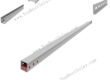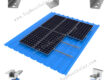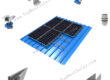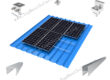
TPO PVC membrane roof solar mounting system
Model: SPC-RF-TPO-DR
Installation Site: Shingle Roofing
Material: SUS304, 6005-T5 Alum
Tilt Angle: 0° to 45°
PV Module: Framed, Frameless
PV Orientation: Portrait, Landscape
Wind Load: 60 m/s
Snow Load: 1.4 KN/M2
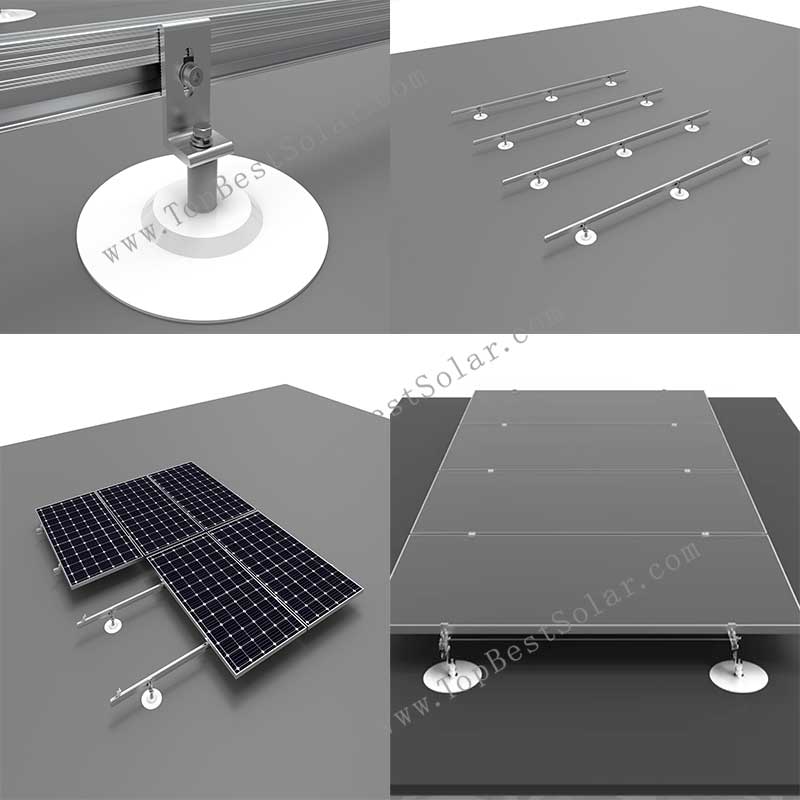
Product Description:
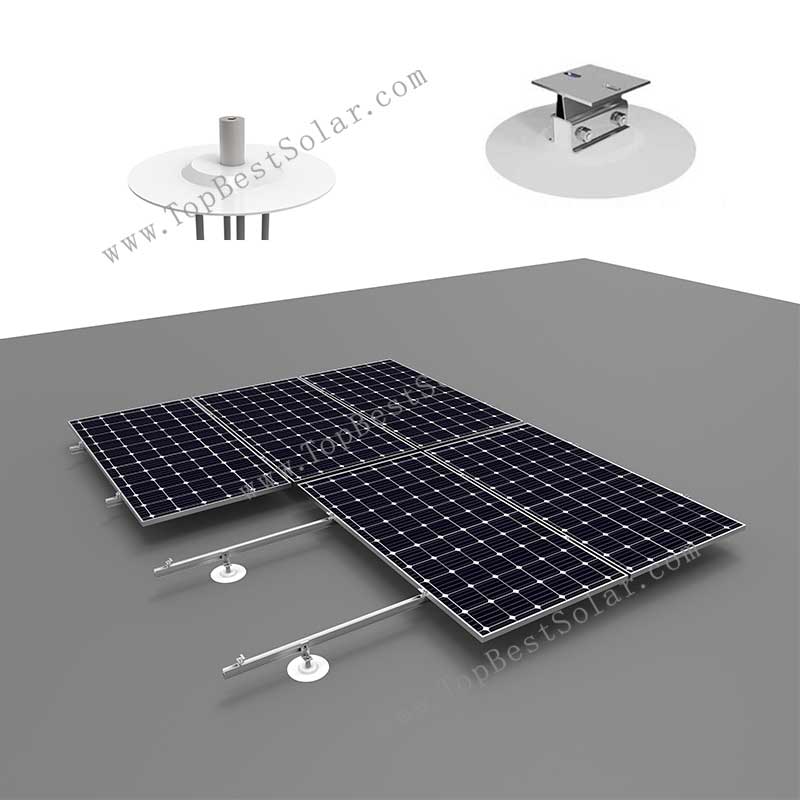
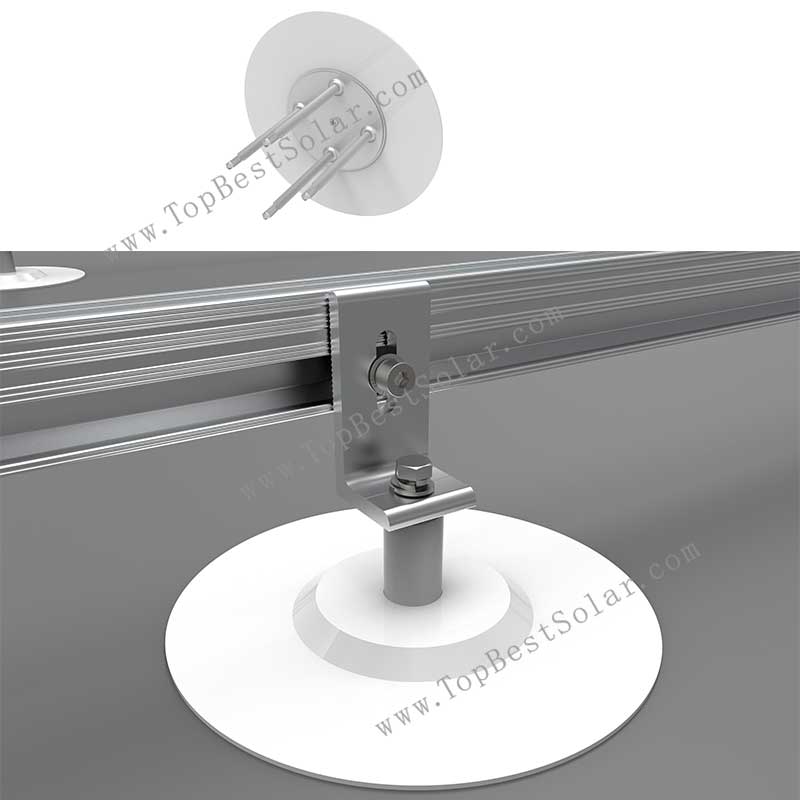
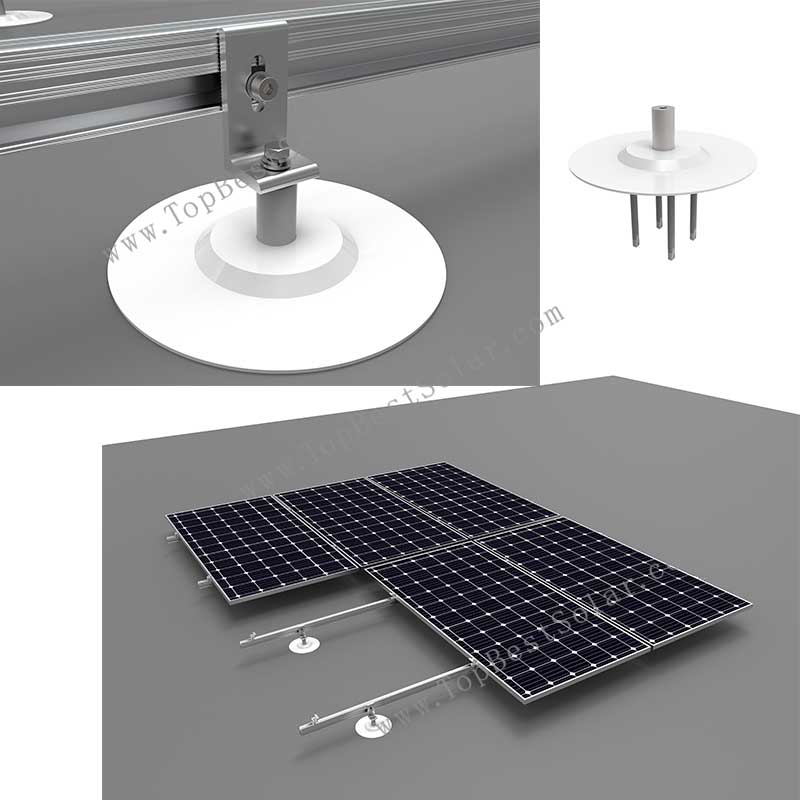
This TPO/PVC membrane roof solar mounting system is a complete kit that keeps a single-ply membrane roof waterproof. Each position starts with a weldable solar mount: self-tapping screws drive through the membrane and the insulation and anchor the base plate to the steel deck, and your crew then heat-welds a matching TPO or PVC disc over the whole fixing. So no fastener stays exposed and no sealant is needed, and the roof can therefore keep its warranty intact. You build the array roof-parallel at 0 degrees, and we ship everything as one bill of materials: weldable mounts, L-feet, rails, clamps and bonding hardware.
What the system includes
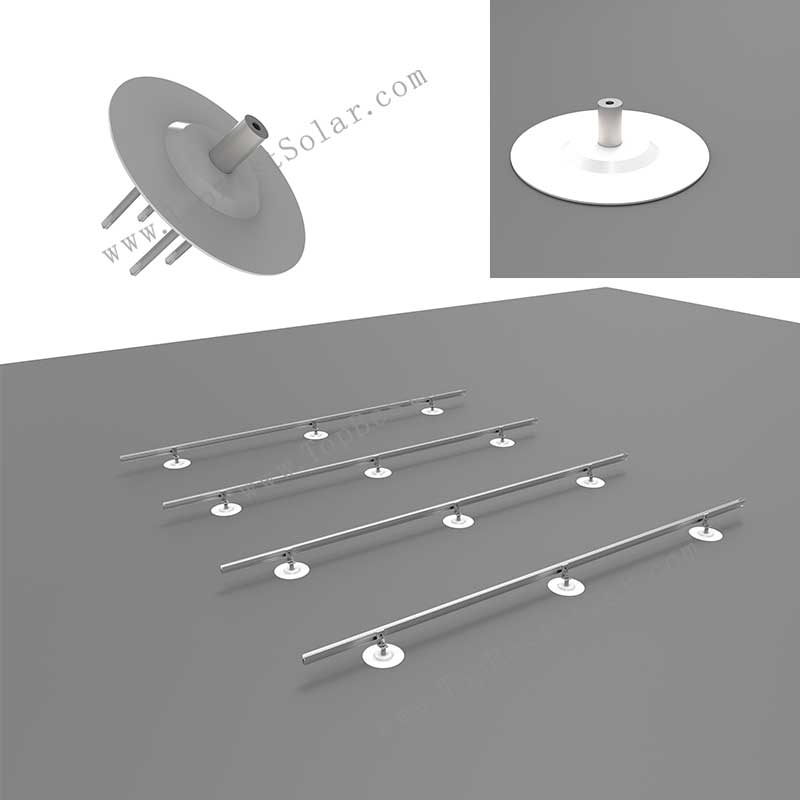
- Weldable solar mounts. A Ø200 mm TPO or PVC membrane disc matched to your roof covers a Ø100 mm aluminium-zinc coated base plate and carries a Ø25 mm × H45 mm 304 stainless steel post with an M8 threaded top; four self-tapping screws anchor each base.
- L-feet. Bolt into the M8 threaded post and carry the rail.
- Mounting rails. Standard profile that accepts mid and end clamps for framed modules.
- Clamps and bonding hardware. Mid clamps, end clamps and grounding clips.
Why EPC contractors choose this membrane roof solar mounting system
- Every fixing ends up sealed waterproof. The screws anchor into the steel deck, and your crew then welds a matching TPO or PVC disc over them, so the roof keeps its waterproofing even though the fixings pass through it.
- Screws hold it down, the weld keeps it dry. Pull-out strength comes from the mechanical fixing — more than 3000 N per base, tested on steel deck 0.8 mm or thicker. The weld only has to keep water out.
- Your crew welds each disc in minutes. They use the same hot-air welder they already run for membrane seams, so you add no ballast, no concrete blocks and no extra dead load.
- The 200 mm disc gives the weld room to work. It leaves a wide, continuous bead around the whole fixing, so your crew can inspect the seal bead by bead on the day it is made instead of trusting a small patch.
- The post accepts the racking you already stock. Its M8 threaded top takes a standard L-foot and mounting rail, so it drops straight into your existing inventory.
- You can strip it out for re-roofing. Just back the screws out and cut the disc free when you replace the membrane, which matters on 25-year roof warranties.
Typical applications
- Insulated commercial roofs: single-ply TPO or PVC membrane over a steel deck of 0.8 mm or thicker
- Lightweight steel-structure factory roofs and warehouses where ballast weight is not permitted
- Retrofit projects where the existing roof warranty must remain valid
- Roof-parallel (0-degree) arrays and east-west layouts
Keeping the roof waterproof when you mount solar panels on TPO roofing
If you are mounting solar panels on TPO roofing, the fixing method decides whether the roof stays watertight. A penetrating mount drives fasteners straight through the waterproofing layer and leaves them exposed, and a ballasted array loads the structure instead. A welded base anchors to the deck first, and then your crew seals every fixing under a TPO/PVC disc welded to the membrane. This system takes that third route: the array sits roof-parallel, screws hold every kilowatt, and the weld keeps the roof waterproof.
Welded TPO/PVC membrane roof solar mounting versus ballasted and penetrating systems
On a single-ply roof there are only three ways to fix an array, and each one differs in roof load, leak risk and install speed:
- Fixings through the waterproofing — welded: 4 per base, every one sealed under a welded disc / ballasted: none / penetrating: 8–12 per kW, each one needing sealant and flashing
- Added dead load — welded: under 1 psf / ballasted: 15–25 psf (30–60 kg/m²) / penetrating: under 1 psf
- How it stays watertight — welded: heat-welded disc over every fixing / ballasted: membrane untouched / penetrating: relies on sealant and flashing
- Leak risk — welded: no leak path / ballasted: none / penetrating: moderate to high
- Install rate — welded: 100–150 kW per day / ballasted: 40–70 kW per day / penetrating: 60–90 kW per day
- Roof warranty — welded: can be preserved / ballasted: may be voided / penetrating: voided
- Structural capacity needed — welded: low / ballasted: high / penetrating: low
Specifiers do reach for a ballasted array first on concrete-deck commercial roofs. However, that route adds 30 to 60 kg of dead load per square metre, and large-span steel-structure factory roofs rarely carry that reserve. For this reason a welded TPO/PVC membrane roof solar mounting system usually wins the job there.
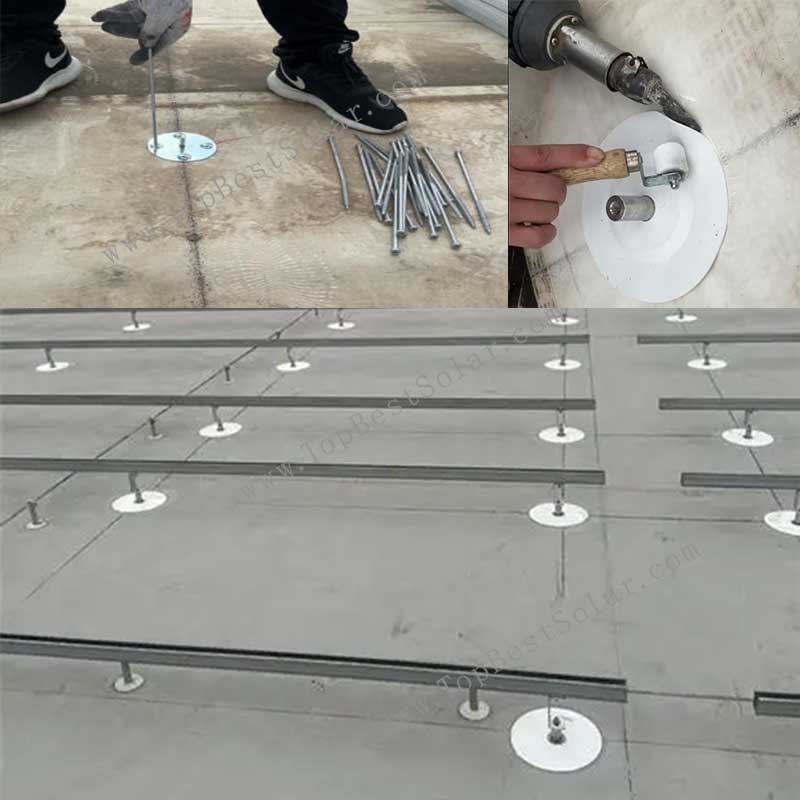
Installation steps for the TPO/PVC membrane roof solar mounting system:
- Clean the membrane surface where each base will sit.
- Mark out the base positions according to the array layout drawing.
- Drive the self-tapping screws through the membrane and the insulation into the steel deck and fasten the base plate.
- Heat-weld the TPO/PVC disc over the fixing; a continuous bead around the disc confirms a complete weld.
- Bolt the L-foot and mounting rail onto the M8 threaded post.
- Clamp the modules and finish bonding and grounding.
Note: the screws must anchor into a steel deck of 0.8 mm or thicker, and the disc must be the same material as your roof membrane.
Note on EPDM roofs
Nobody heat-welds EPDM membranes. For EPDM and bitumen roofs we supply an adhesive-fixed base instead. Tell us your membrane type with the enquiry and we will match the right fixing method.
Ordering information
Each weldable mount weighs 0.47 kg in the TPO version. We keep screws in stock from 80 mm to 125 mm, and we make longer lengths for deeper insulation. We supply EPC contractors and distributors factory-direct as a complete kit, we offer OEM branding and palletised packing, and we quote against your roof build-up. Send us your membrane type, insulation thickness, deck thickness, wind load requirement and array layout, and we will return a quotation together with a pull-out test report.
Will this mounting system work on both TPO and PVC single-ply membranes?
Yes. Each base is supplied with a Ø200 mm disc in the same material as the roof membrane — TPO disc on a TPO roof, PVC disc on a PVC roof. The disc is the same formulation as the field sheet, so the hot-air weld chemically fuses the two and the seam behaves the same as the rest of the roof. Mixing materials (a TPO disc on a PVC sheet, or vice versa) will not weld, so please tell us the membrane brand and type with the enquiry and we will ship the matched disc.
Can the array be tilted, or only roof-parallel (0°)?
Both. The M8 threaded post accepts a standard L-foot, so the same base can carry a roof-parallel (0°) array on a flat TPO/PVC roof or a tilted array on a low-slope pitched roof. Tilt range with our standard L-foot is 0° to 45°. For tilted arrays the wind load on the tilted face is greater, so we re-check the fixing density against your wind zone.
- Description
-
Product Description:
This TPO/PVC membrane roof solar mounting system is a complete kit that keeps a single-ply membrane roof waterproof. Each position starts with a weldable solar mount: self-tapping screws drive through the membrane and the insulation and anchor the base plate to the steel deck, and your crew then heat-welds a matching TPO or PVC disc over the whole fixing. So no fastener stays exposed and no sealant is needed, and the roof can therefore keep its warranty intact. You build the array roof-parallel at 0 degrees, and we ship everything as one bill of materials: weldable mounts, L-feet, rails, clamps and bonding hardware.
What the system includes
- Weldable solar mounts. A Ø200 mm TPO or PVC membrane disc matched to your roof covers a Ø100 mm aluminium-zinc coated base plate and carries a Ø25 mm × H45 mm 304 stainless steel post with an M8 threaded top; four self-tapping screws anchor each base.
- L-feet. Bolt into the M8 threaded post and carry the rail.
- Mounting rails. Standard profile that accepts mid and end clamps for framed modules.
- Clamps and bonding hardware. Mid clamps, end clamps and grounding clips.
Why EPC contractors choose this membrane roof solar mounting system
- Every fixing ends up sealed waterproof. The screws anchor into the steel deck, and your crew then welds a matching TPO or PVC disc over them, so the roof keeps its waterproofing even though the fixings pass through it.
- Screws hold it down, the weld keeps it dry. Pull-out strength comes from the mechanical fixing — more than 3000 N per base, tested on steel deck 0.8 mm or thicker. The weld only has to keep water out.
- Your crew welds each disc in minutes. They use the same hot-air welder they already run for membrane seams, so you add no ballast, no concrete blocks and no extra dead load.
- The 200 mm disc gives the weld room to work. It leaves a wide, continuous bead around the whole fixing, so your crew can inspect the seal bead by bead on the day it is made instead of trusting a small patch.
- The post accepts the racking you already stock. Its M8 threaded top takes a standard L-foot and mounting rail, so it drops straight into your existing inventory.
- You can strip it out for re-roofing. Just back the screws out and cut the disc free when you replace the membrane, which matters on 25-year roof warranties.
Typical applications
- Insulated commercial roofs: single-ply TPO or PVC membrane over a steel deck of 0.8 mm or thicker
- Lightweight steel-structure factory roofs and warehouses where ballast weight is not permitted
- Retrofit projects where the existing roof warranty must remain valid
- Roof-parallel (0-degree) arrays and east-west layouts
Keeping the roof waterproof when you mount solar panels on TPO roofing
If you are mounting solar panels on TPO roofing, the fixing method decides whether the roof stays watertight. A penetrating mount drives fasteners straight through the waterproofing layer and leaves them exposed, and a ballasted array loads the structure instead. A welded base anchors to the deck first, and then your crew seals every fixing under a TPO/PVC disc welded to the membrane. This system takes that third route: the array sits roof-parallel, screws hold every kilowatt, and the weld keeps the roof waterproof.
Welded TPO/PVC membrane roof solar mounting versus ballasted and penetrating systems
On a single-ply roof there are only three ways to fix an array, and each one differs in roof load, leak risk and install speed:
- Fixings through the waterproofing — welded: 4 per base, every one sealed under a welded disc / ballasted: none / penetrating: 8–12 per kW, each one needing sealant and flashing
- Added dead load — welded: under 1 psf / ballasted: 15–25 psf (30–60 kg/m²) / penetrating: under 1 psf
- How it stays watertight — welded: heat-welded disc over every fixing / ballasted: membrane untouched / penetrating: relies on sealant and flashing
- Leak risk — welded: no leak path / ballasted: none / penetrating: moderate to high
- Install rate — welded: 100–150 kW per day / ballasted: 40–70 kW per day / penetrating: 60–90 kW per day
- Roof warranty — welded: can be preserved / ballasted: may be voided / penetrating: voided
- Structural capacity needed — welded: low / ballasted: high / penetrating: low
Specifiers do reach for a ballasted array first on concrete-deck commercial roofs. However, that route adds 30 to 60 kg of dead load per square metre, and large-span steel-structure factory roofs rarely carry that reserve. For this reason a welded TPO/PVC membrane roof solar mounting system usually wins the job there.
Installation steps for the TPO/PVC membrane roof solar mounting system:
- Clean the membrane surface where each base will sit.
- Mark out the base positions according to the array layout drawing.
- Drive the self-tapping screws through the membrane and the insulation into the steel deck and fasten the base plate.
- Heat-weld the TPO/PVC disc over the fixing; a continuous bead around the disc confirms a complete weld.
- Bolt the L-foot and mounting rail onto the M8 threaded post.
- Clamp the modules and finish bonding and grounding.
Note: the screws must anchor into a steel deck of 0.8 mm or thicker, and the disc must be the same material as your roof membrane.
Note on EPDM roofs
Nobody heat-welds EPDM membranes. For EPDM and bitumen roofs we supply an adhesive-fixed base instead. Tell us your membrane type with the enquiry and we will match the right fixing method.
Ordering information
Each weldable mount weighs 0.47 kg in the TPO version. We keep screws in stock from 80 mm to 125 mm, and we make longer lengths for deeper insulation. We supply EPC contractors and distributors factory-direct as a complete kit, we offer OEM branding and palletised packing, and we quote against your roof build-up. Send us your membrane type, insulation thickness, deck thickness, wind load requirement and array layout, and we will return a quotation together with a pull-out test report.
- Installation
-
- FAQ
-
Will this mounting system work on both TPO and PVC single-ply membranes?
Yes. Each base is supplied with a Ø200 mm disc in the same material as the roof membrane — TPO disc on a TPO roof, PVC disc on a PVC roof. The disc is the same formulation as the field sheet, so the hot-air weld chemically fuses the two and the seam behaves the same as the rest of the roof. Mixing materials (a TPO disc on a PVC sheet, or vice versa) will not weld, so please tell us the membrane brand and type with the enquiry and we will ship the matched disc.
Can the array be tilted, or only roof-parallel (0°)?
Both. The M8 threaded post accepts a standard L-foot, so the same base can carry a roof-parallel (0°) array on a flat TPO/PVC roof or a tilted array on a low-slope pitched roof. Tilt range with our standard L-foot is 0° to 45°. For tilted arrays the wind load on the tilted face is greater, so we re-check the fixing density against your wind zone.
- Leave Message
-