


Solar panel mounting systems (also known as solar racking) are the structural foundations that securely anchor solar panels to rooftops, the ground, or poles. They account for roughly 8% to 12% of the total cost of a residential solar setup. These systems optimize the solar tilt angle for maximum sun exposure, safeguard the panels against extreme weather, and facilitate airflow to keep the modules cool.
Types of Mounting Systems
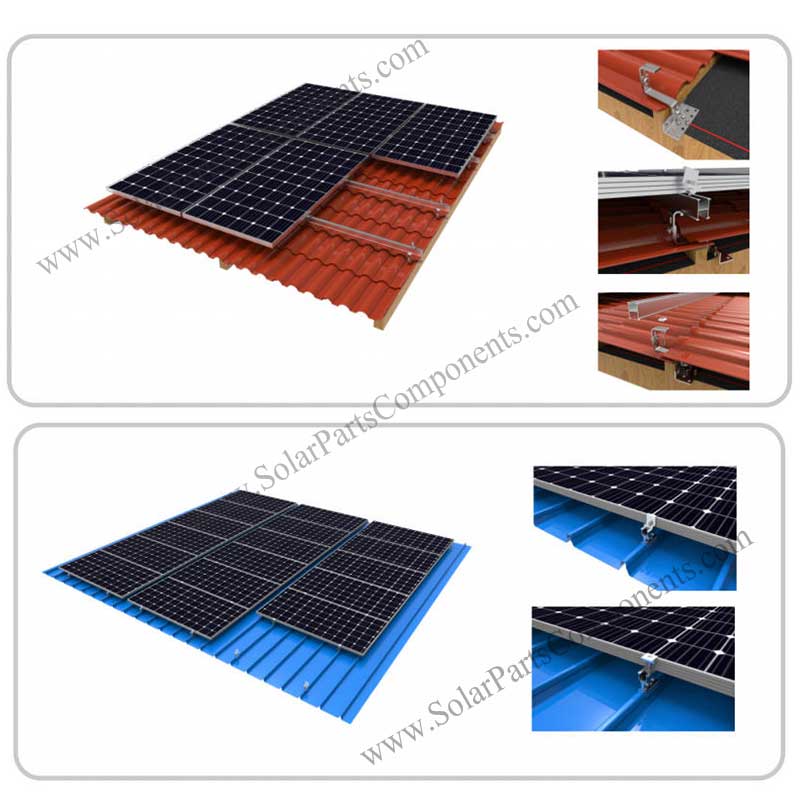
Pitched Roof Mounts
Railed Systems: The most common layout uses aluminum rails attached to roof rafters via L-feet or standoffs. Panels are clamped onto the rails.
Railless Systems: Panels connect directly to individual roof brackets, reducing structural weight and lowering hardware costs.
Flashing Elements: Hardware penetrations require metal flashing plates and heavy-duty butyl sealants to guarantee waterproof seals.
Ballasted Mounts: Heavy concrete blocks weigh down the structural racks without piercing the roof membrane.
Mechanical Anchors: Structural components attach directly to the building framing, providing optimal resistance in high-wind regions.
3. Ground & Pole Mounts
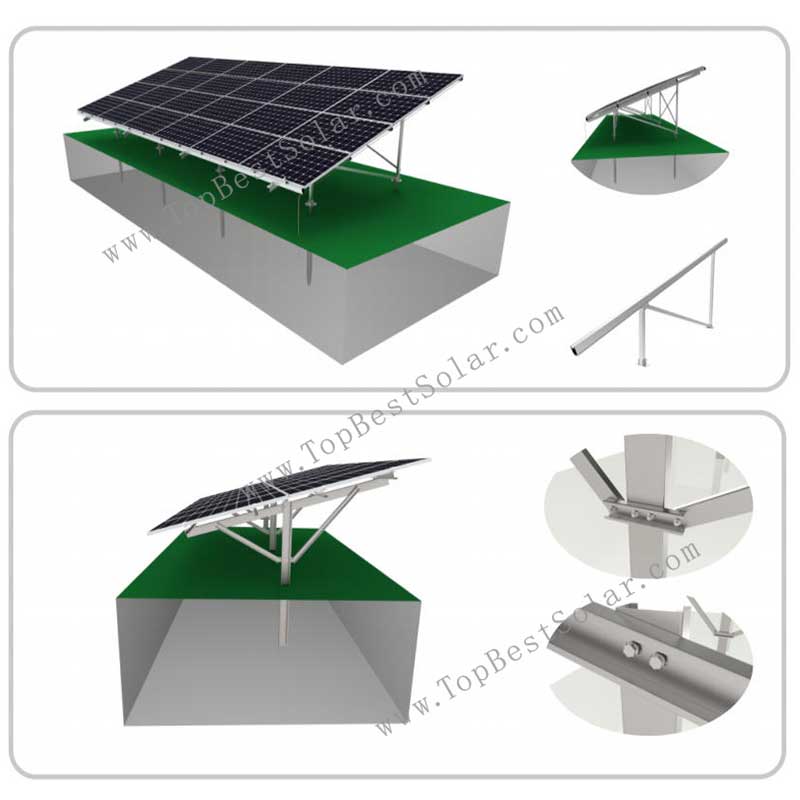
Standard Ground Mounts: Steel or aluminum frameworks are anchored into concrete foundations or driven piers directly in open soil.
Pole Mounts: Arrays are secured to a single structural pole, elevating them away from ground obstructions.
4. Solar Carport Systems:Provide shed and green electricity for solar parking lot.
Tracking Systems: Motorized pole or ground mounts rotate panels along a single or dual-axis to follow daily solar movements.
Core Equipment Components
Every reliable racking setup relies on specialized, heavy-duty parts:
L-Feet & Standoffs: Critical brackets that connect your roof structure directly to the metal solar framing.
Mid-Clamps & End-Clamps: Aluminum hardware that secures individual panels safely to the rails.
Splices: Structural extension pieces used to securely connect multiple rails together over wide spans.
Grounding Lugs: Specialized electrical hardware that safely binds the racking system to the home’s grounding system.
Structural Benefits & Planning Factors
Increased Efficiency: Elevating panels allows air to circulate underneath, which cools the electronics and boosts energy output.
Weather Resistance: Certified racking is engineered to withstand strong wind uplifts and seasonal snow loads.
Code Restrictions: Many local jurisdictions enforce strict zoning rules, such as fire safety setbacks or the 33% roof coverage threshold.
Thermal Expansion: Mounting hardware must provide tiny expansion gaps to let metals breathe during extreme weather shifts.
To help you find the right system, what surface are you planning to mount your panels on (e.g., a shingle roof, a flat roof, or a ground space)? If you have a specific wind or snow load requirement for your region, let me know!