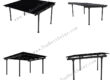
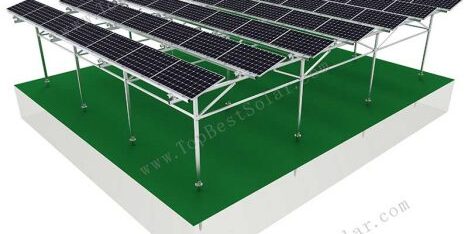
For landowners and agricultural project developers, the concept of “solar farmland” has evolved from a niche idea into a mainstream strategy for risk mitigation and revenue diversification. The core challenge, however, has always been the trade-off: either sacrifice valuable crop-growing space to ground-mounted arrays or compromise on energy yield with low-clearance designs. The SPC-CAG-GAG-H-V elevated solar mounting system redefines this balance. By combining a raised framework with high-strength, corrosion-resistant materials, this solution enables genuine co-location—where crops thrive underneath and energy is generated above. This guide explores how this specific engineering approach solves the key physical and economic constraints of agrivoltaics.
1. The Structural Advantage: High Clearance and Minimal Ground Disturbance
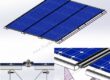
Unlike traditional low-profile ground mounts that render land unusable for agriculture, the SPC-CAG-GAG-H-V system is defined by its elevated design. This creates a functional “solar canopy” over the working farm.
-
Optimized Light Sharing: The structure is engineered for significant ground clearance, allowing sufficient sunlight to penetrate for photosynthesis while the panels harvest energy. This “light-sharing” model is critical for crops that require partial shade, effectively turning a constraint into a benefit.
-
Non-Invasive Foundation: Utilizing hot-dip galvanized (HDG) steel ground screws instead of massive concrete footings, the system minimizes soil compaction and land disturbance. This allows for easier crop rotation and standard farming machinery access underneath the array.
-
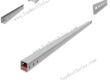
Pre-Assembled Speed: Key components, including the notch aluminum supports and angle-adjustable brackets, arrive pre-configured. This drastically reduces on-site assembly time and heavy equipment requirements, a major cost factor in rural project deployment.
2. Durability in Harsh Environments: Built for 60 m/s Winds and Corrosion
Farmland is often exposed to harsh weather and, in some cases, high humidity or chemical exposure from agricultural activities. The material selection and structural design of this system are tailored for this dual-use environment.
-
Corrosion-Resistant Material Stack: The primary framework uses high-anodized aluminum alloy for the rails and legs, paired with SUS304 stainless steel for critical fasteners. The ground screws are HDG steel, providing a robust defense against soil moisture and fertilizer corrosion.
-
Extreme Load Engineering: The system is rated for wind loads up to 60 m/s and snow loads of 1.4 kN/m². This is achieved through a triangulated support structure and rigid rail splicing, ensuring the array remains stable during seasonal storms without requiring excessive land footprint.
-
Crop Microclimate Benefits: Beyond just mounting, the panels create a favorable microclimate. They reduce soil water evaporation during the day and act as a thermal blanket at night, mitigating frost risk and potentially extending growing seasons—a significant secondary benefit for crop yield.
3. The Installation Workflow: From Barren Land to Productive Agrivoltaic Site
The transition from conventional farmland to an energy-generating asset is streamlined through a logical, repeatable process.
-
Layout and Ground Screw Installation: Using specialized machinery, ground screws are driven into the soil according to the engineering layout, avoiding critical root zones.
-
Leg and Support Assembly: Pre-assembled leg supports are mounted onto the ground screws, with adjustable brackets allowing for precise leveling on sloped or uneven terrain.
-
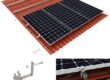
Rail Deployment and Panel Mounting: Aluminum rails are snapped into place, and modules are secured using end clamps and rail clamps. The entire process is designed to be tool-friendly for standard installation crews.
4. Why Elevated Solar Mounting is the Future of Farmland ROI
For landowners, the decision to install solar is increasingly about asset diversification. The SPC-CAG-GAG-H-V system directly addresses this by turning unproductive airspace above crops into a reliable revenue stream.
-
Zero Land Sacrifice: This is the key differentiator. The land continues its primary agricultural function, eliminating the opportunity cost associated with traditional solar farms.
-
Reduced Operational Risk: The additional income from energy generation provides a financial buffer against poor harvests or volatile crop prices.
-
Long-Term Asset Value: With a 15-year product warranty and a design life that matches the PV modules (25+ years), the system is a long-term infrastructure upgrade that increases the capital value of the property.
For forward-thinking farmers and land investors, the SPC-CAG-GAG-H-V elevated mounting system is not just a racking solution; it is the enabling hardware for a more resilient and profitable agricultural business model.