


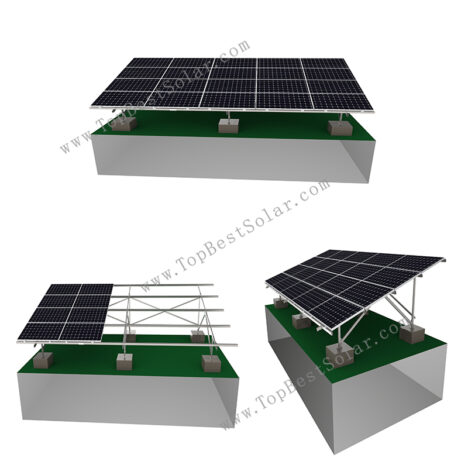
In large-scale solar ground-mount projects, particularly those involving refurbishment of existing structures or installation on open terrain with extreme weather exposure, the selection of materials and structural configuration directly determines long-term energy yield and maintenance costs. Traditional hot-dip galvanized steel systems offer proven corrosion resistance but add significant weight to foundations and require careful handling of weld repairs during refurbishment. Aluminium-only structures are lightweight but may struggle with high wind uplift or heavy snow accumulation in certain climates. The ZAM Steel Ground Structure Systems Refurbishment — S350GD-ZM ZAM Coated Steel SUS304 Stainless Steel AL6005-T5 Aluminium Alloy Ground Mounting System for Open Area Solar PV Installation Wind Load 60 m/s Snow Load 3.6 KN/M² Tilt Angle 0° to 60° Framed Frameless Modules Portrait Landscape Orientation Building Height Up to 20m (from Top Best Solar, topbestsolar.com) addresses these challenges through a hybrid material strategy: primary load-bearing members are fabricated from S350GD structural steel with a ZAM (zinc-aluminum-magnesium) coating, offering 10–20× superior corrosion resistance compared to conventional galvanized steel in cut-edge and scratched conditions; critical connection points and hardware utilize SUS304 stainless steel for fastener integrity; and select components incorporate AL6005-T5 aluminium alloy for weight reduction where structural loads permit. The system accommodates a full tilt angle range from 0° (flat) to 60° (steep), supports both framed and frameless PV modules in portrait or landscape orientation, and is engineered for wind speeds up to 60 m/s and snow loads up to 3.6 kN/m² — covering virtually all non-seismic ground-mount scenarios globally. But how exactly does the ZAM coating chemistry outperform traditional galvanizing in refurbishment contexts where cut edges and drilled holes are inevitable, what structural design principles enable the 0° to 60° tilt range without compromising wind tunnel-validated uplift resistance, and when should specifiers choose SUS304 over AL6005-T5 for specific connection zones? Below is the full breakdown for solar EPC contractors, structural engineers, asset managers overseeing ground-mount portfolio refurbishments, and procurement specialists evaluating lifecycle cost.
Why ZAM coating and hybrid material selection redefine ground-mount refurbishment standards
The ZAM Steel Ground Structure Systems Refurbishment — S350GD-ZM ZAM Coated Steel SUS304 Stainless Steel AL6005-T5 Aluminium Alloy Ground Mounting System for Open Area Solar PV Installation Wind Load 60 m/s Snow Load 3.6 KN/M² Tilt Angle 0° to 60° Framed Frameless Modules Portrait Landscape Orientation Building Height Up to 20m (from Top Best Solar, topbestsolar.com) is built around three material innovations tailored for refurbishment and new-build alike:
-
ZAM Coating (Zinc-Aluminum-Magnesium) on S350GD Steel: Conventional hot-dip galvanized (HDG) steel relies on a pure zinc layer that sacrificially protects the substrate. However, at cut edges, drill holes, or weld zones, the zinc layer is disrupted, and corrosion can initiate. ZAM coating incorporates magnesium and aluminum into the zinc matrix, forming a dense, self-healing barrier layer that significantly reduces edge creep and red rust propagation. In refurbishment projects where existing structures are modified or extended on-site, this edge-corrosion resistance is critical for maintaining structural integrity over the 25–30 year design life without requiring post-cut touch-up painting.
-
SUS304 Stainless Steel for Critical Connections: Bolts, nuts, washers, and clamping hardware exposed to direct weathering or in contact with dissimilar metals are specified in SUS304 austenitic stainless steel. This eliminates galvanic corrosion risk between ZAM-coated steel and aluminium module frames, and ensures that fastener torque retention remains stable across thermal cycling from -40°C to +85°C.
-
AL6005-T5 Aluminium Alloy for Weight-Optimized Components: Where dead load reduction benefits foundation design (e.g., on retrofitted roofs or soft-soil ground), select purlins or splice plates are offered in AL6005-T5 aluminium alloy. T5 temper provides good strength-to-weight ratio and corrosion resistance compatible with ZAM steel and SUS304 in the same assembly, provided proper isolation (paint or gasket) is applied at bi-metallic interfaces.
Key specifications and design parameters (From Top Best Solar Product Page)
-
Product Name: ZAM Steel Ground Structure Systems Refurbishment
-
Primary Material: S350GD structural steel with ZAM coating (zinc-aluminum-magnesium alloy)
-
Secondary Materials: SUS304 stainless steel (fasteners, brackets), AL6005-T5 aluminium alloy (select lightweight components)
-
Installation Site: Open area (ground-mounted, non-shaded, exposed terrain)
-
Tilt Angle Range: 0° to 60° (continuously adjustable or fixed-angle options per project)
-
PV Module Compatibility: Framed (aluminium frame) and frameless (glass-glass / laminate) modules
-
Module Orientation: Portrait (vertical) and landscape (horizontal) layout supported
-
Wind Load: 60 m/s (216 km/h / 134 mph) — corresponds to cyclonic/typhoon-prone regions
-
Snow Load: 3.6 kN/m² (approx. 360 kg/m² or 73 psf) — covers heavy snowfall zones (e.g., alpine, northern continental)
-
Building Height: Up to 20 metres (structure height above ground, relevant for wind exposure category)
-
Applicable Standards: Compliant with international structural codes (Eurocode, ASCE 7, GB 50009, etc.); wind tunnel validation available
-
Corrosion Protection: ZAM coating on steel (cut-edge self-healing); SUS304 for exposed hardware; AL6005-T5 naturally corrosion-resistant
-
Refurbishment Scope: Compatible with existing foundation layouts; modular extension and reinforcement kits available for upgrading older galvanized structures
-
Manufacturer: Top Best Solar (topbestsolar.com)
Structural logic behind 0° to 60° tilt angle range and extreme load capacity
A single ground-mount system spanning tilt angles from 0° (flat/ballasted) to 60° (steep-slope optimal for high-latitude winter production) requires a versatile connection design that maintains structural stability across the entire range:
-
Adjustable Cleat and Splice Plate System: The connection between the vertical post and the tilted beam uses a multi-hole cleat plate with bolted connections, allowing field adjustment of tilt angle without welding or cutting. At lower tilt angles (0°–15°), wind uplift forces dominate and the system relies on the weight of the foundation or ballast; at higher tilt angles (30°–60°), the structure behaves more like a traditional sloped roof, with snow load becoming the governing factor. The same cleat geometry handles both regimes through optimized bolt patterns.
-
60 m/s Wind Load Validation: For open-area installations, wind speeds of 60 m/s correspond to Exposure Category C (open terrain) in ASCE 7 or Terrain Category II in Eurocode. The structural model accounts for both positive (downward) and negative (uplift) pressure coefficients on the module surface. ZAM steel’s higher yield strength (S350GD ≈ 350 MPa minimum yield) allows slenderer profiles than standard S235/S275 steel, reducing material weight while meeting deflection limits (typically L/100 for module support rails).
-
3.6 kN/m² Snow Load Accommodation: This snow load value (≈ 360 kg/m²) is typical for mountainous regions or northern latitudes with heavy annual precipitation. The rail span and purlin spacing are calculated to limit elastic deflection under snow to avoid module glass breakage or frame distortion. The system’s compatibility with both framed and frameless modules means that glass-glass modules (which are heavier but stiffer) can be specified for additional snow resilience.
Material compatibility and corrosion management in hybrid systems
When combining S350GD-ZM steel, SUS304 stainless steel, and AL6005-T5 aluminium in a single ground-mount structure, galvanic corrosion prevention is essential:
-
Bi-Metallic Isolation at Contact Points: Where ZAM steel meets AL6005-T5 aluminium (e.g., a ZAM main beam connected to an AL6005-T5 purlin), a nylon or EPDM gasket is inserted between the dissimilar metals to interrupt the electrolytic path. Alternatively, a zinc-rich primer or Dacromet coating is applied to the steel surface at the interface.
-
Stainless Steel Fasteners as Neutral Element: SUS304 bolts and washers have a corrosion potential close to aluminium and significantly different from ZAM steel, but their small surface area relative to the joined plates minimizes galvanic current density. In practice, using SUS304 hardware with a sealing washer (bonded neoprene) provides reliable long-term isolation.
-
Cut-Edge Protection in Refurbishment: When modifying existing galvanized structures with new ZAM components, all cut edges, drilled holes, and weld zones on the original steel should be treated with a cold-galvanizing spray or ZAM-matched repair paint to maintain coating continuity. ZAM’s self-healing property partially compensates for minor scratches, but systematic protection is recommended for refurbishment joints.
Typical application scenarios
-
Greenfield Ground-Mount Solar Farms in High-Wind Regions: Open plains, coastal zones, and plateau areas with frequent storms benefit from the 60 m/s wind rating and ZAM corrosion resistance against salt-laden air.
-
Refurbishment and Capacity Upgrade of Existing PV Plants: Older plants with HDG steel structures showing edge rust or section loss can be selectively replaced or reinforced with ZAM components without full demolition. The modular refurbishment kit allows partial upgrades aligned with inverter or module replacement cycles.
-
High-Latitude or Alpine Installations: Snow loads up to 3.6 kN/m² and tilt angles up to 60° enable optimized winter production in Switzerland, Scandinavia, Canada, and northern China. The system’s ability to mount frameless glass-glass modules improves snow shedding.
-
Agri-Voltaic Ground Mounts: Open-area installations above crops or grazing land benefit from the adjustable tilt (to balance light transmission) and the corrosion resistance of ZAM steel against agricultural chemicals and irrigation humidity.
Installation and quality assurance checklist
When procuring the ZAM Steel Ground Structure Systems Refurbishment — S350GD-ZM ZAM Coated Steel SUS304 Stainless Steel AL6005-T5 Aluminium Alloy Ground Mounting System for Open Area Solar PV Installation Wind Load 60 m/s Snow Load 3.6 KN/M² Tilt Angle 0° to 60° Framed Frameless Modules Portrait Landscape Orientation Building Height Up to 20m (from Top Best Solar, topbestsolar.com):
✅ Specify tilt angle range and fixed/adjustable preference — continuous adjustability (0–60°) vs. discrete preset angles affects cleat plate design and cost.
✅ Confirm module type and orientation — framed vs. frameless, portrait vs. landscape, module dimensions and weight for rail span calculation.
✅ Provide site wind and snow data — basic wind speed (m/s), exposure category, snow zone (kN/m²) for structural sign-off.
✅ Request ZAM coating certification — coating weight (g/m²), Mg/Al content, salt spray test hours (ASTM B117), edge creep test results.
✅ Verify bi-metallic isolation details — gasket material, fastener specification (SUS304 grade), torque values for stainless bolts.
✅ Ask about refurbishment-specific engineering support — existing foundation assessment, load-testing protocol for retrofitted connections, as-built documentation.
Conclusion: A hybrid-material ground-mount system engineered for extreme climates and lifecycle refurbishment
The ZAM Steel Ground Structure Systems Refurbishment — S350GD-ZM ZAM Coated Steel SUS304 Stainless Steel AL6005-T5 Aluminium Alloy Ground Mounting System for Open Area Solar PV Installation Wind Load 60 m/s Snow Load 3.6 KN/M² Tilt Angle 0° to 60° Framed Frameless Modules Portrait Landscape Orientation Building Height Up to 20m (from Top Best Solar, topbestsolar.com) represents a material-evolution response to the limitations of conventional galvanized or aluminium-only ground mounts. By deploying ZAM-coated steel for primary structure (leveraging superior cut-edge corrosion resistance), SUS304 for critical fasteners, and AL6005-T5 for weight-sensitive elements, the system achieves a balance of strength, durability, and installability unmatched by single-material designs. The validated wind (60 m/s) and snow (3.6 kN/m²) loads, combined with the full 0°–60° tilt range and dual-module-type compatibility, make it a universal specification for open-area ground-mount projects — from new solar farms in typhoon corridors to refurbishment of aging assets requiring upgraded corrosion protection. For EPC contractors and asset owners prioritizing lifecycle cost over first-cost minimization, Top Best Solar’s ZAM hybrid ground system is the technically justified choice.