


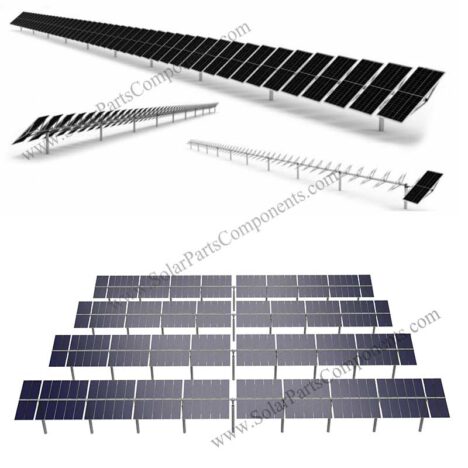
Solar Tracker Mounting System Single Axis
Model: TBS-TR-01
Installation Site: Solar Mount
Material: steel, 6005-T5 Alum
Tilt Angle: 0° to 45°
PV Module: Framed, Frameless
PV Orientation: Portrait, Landscape
Wind Load: 60 m/s
Snow Load: 1.4 KN/M2
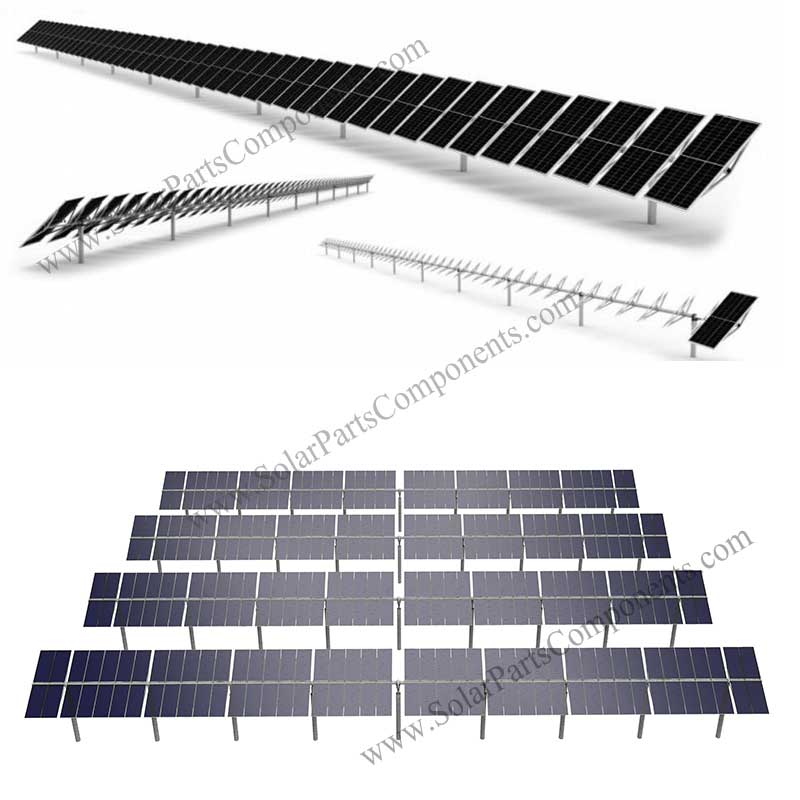
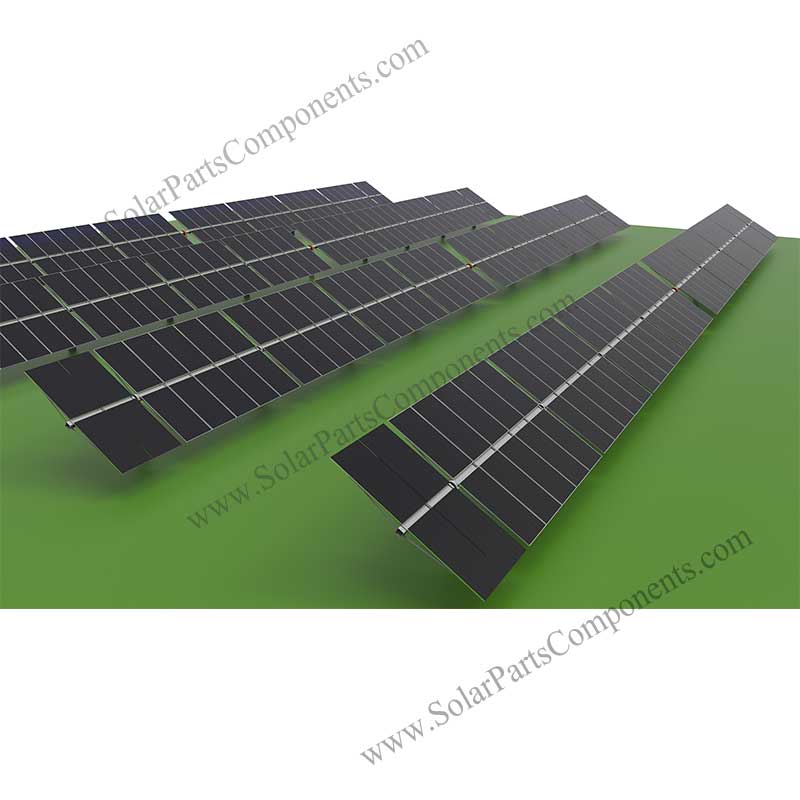
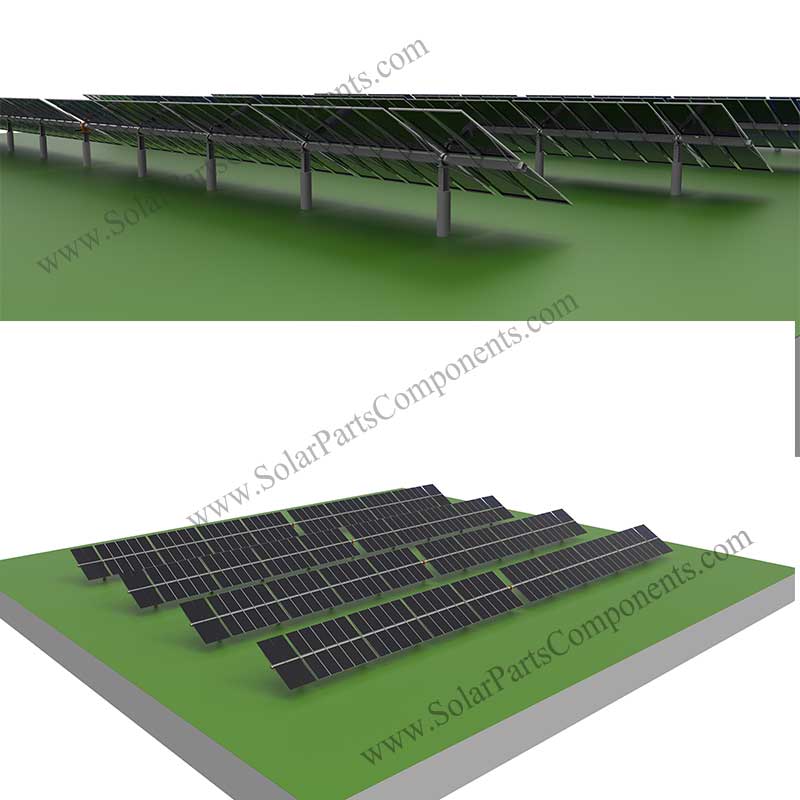
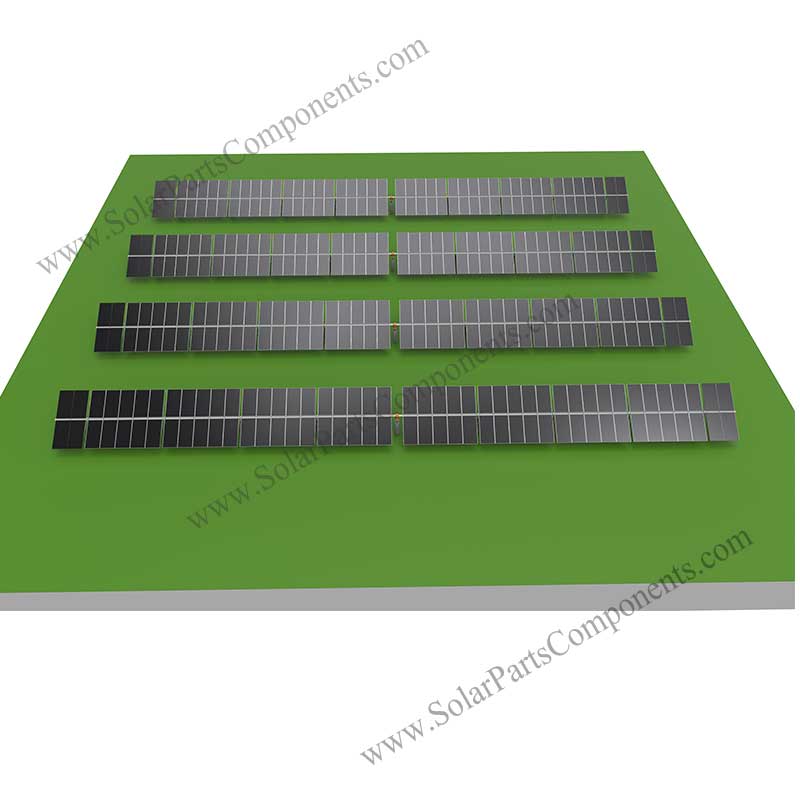
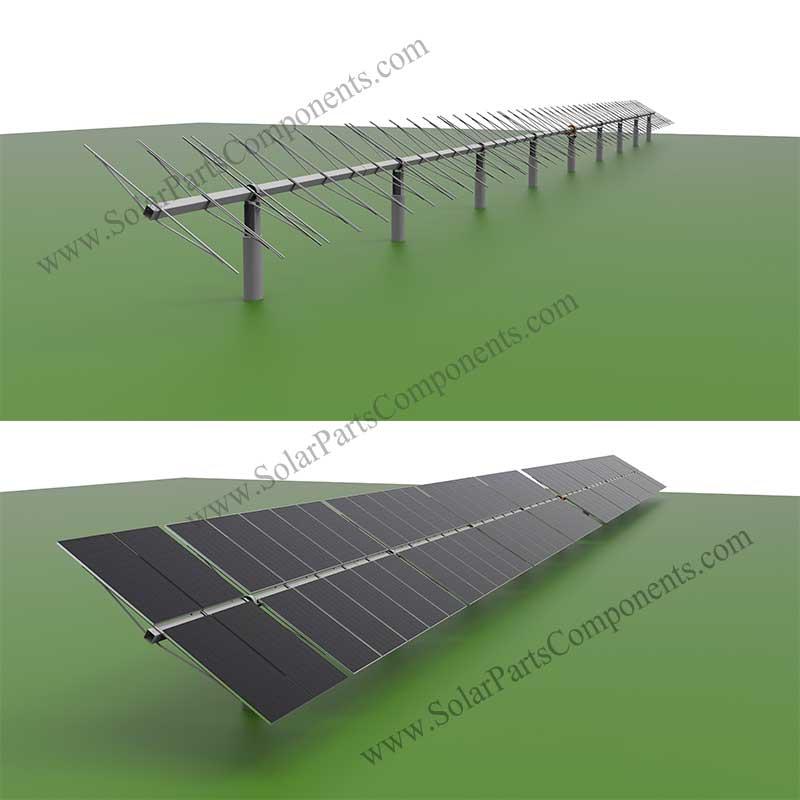
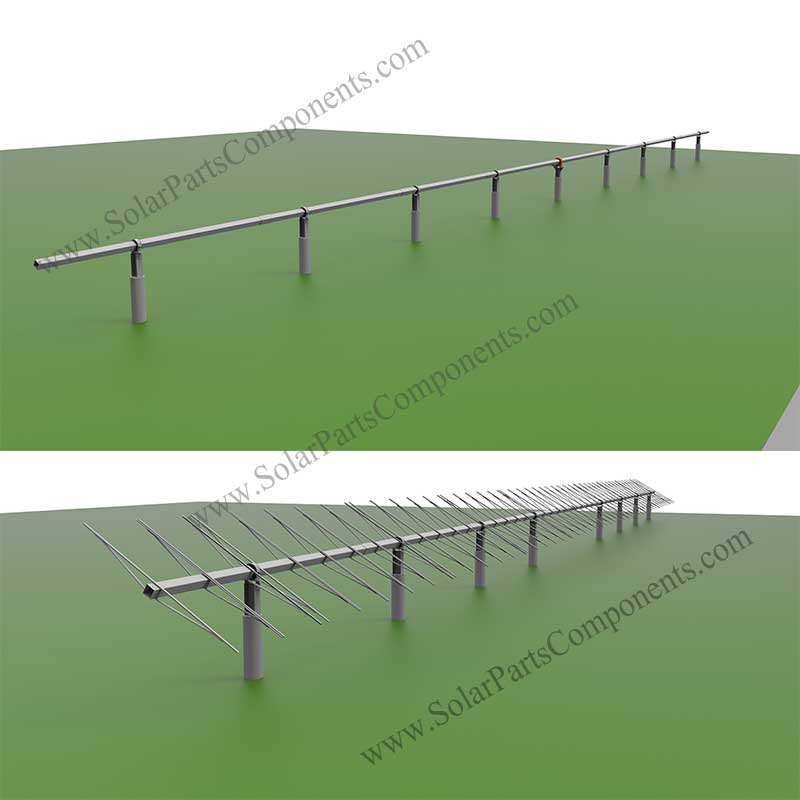
Solar Tracking System Single Axis is the most common used for a utility-scale or large commercial solar project. The right choice can add 15–40% more energy yield — or waste your entire tracking budget on the wrong technology.
At TopBest Solar, we manufacture both single axis and dual axis solar tracker mounting systems for EPCs, developers, and distributors across 60+ countries. This guide summarizes the real-world differences so you can pick the right tracker for your site, climate, and budget.
What Is a Solar Tracking System Single Axis?
A Solar Tracking System Single Axis is a Solar modules mounting structure that rotates on one axis to follow the sun’s daily east-to-west movement. It can significantly enhance the power generation efficiency of the photovoltaic panels. This does not change tilt seasonally — the panel angle stays fixed throughout the year.
There are three main types:
- Horizontal single axis tracker (HSAT)— the most common type. The tracker rotates around a horizontal north-south pipe, with multiple panels connected in a single row driven by one motor.
- Vertical single axis tracker (VSAT)— rotates around a vertical pole. Mainly used in high-latitude regions where the sun stays low on the horizon.
- Tilted single axis tracker— the rotation axis is tilted (often at the local latitude angle). Popular in snowy regions because tilted panels shed snow naturally.
Compared with a fixed-tilt system, a single axis solar tracker delivers 15–25% more annual energy yield, depending on latitude and DNI (direct normal irradiance).
Advangtage for this Single Axis Solar Tracker
- Lowest cost per kWh generated
- 15–25% more energy than fixed tilt — typically a 3–5 year payback on the tracker premium
- Proven technology at GW scale, bankable for project finance
- Lower maintenance burden, longer mean time between failures (MTBF)
- Compatible with bifacial modules and agrivoltaics
- Simpler backtracking algorithm to avoid row-to-row shading
At TopBest Solar, we manufacture both single axis and dual axis solar tracker mounting systems.
For more details, welcome contact us: www.topbestsolar.com
Installation instructions for Solar Tracking System Single Axis
- Description
-
Solar Tracking System Single Axis is the most common used for a utility-scale or large commercial solar project. The right choice can add 15–40% more energy yield — or waste your entire tracking budget on the wrong technology.
At TopBest Solar, we manufacture both single axis and dual axis solar tracker mounting systems for EPCs, developers, and distributors across 60+ countries. This guide summarizes the real-world differences so you can pick the right tracker for your site, climate, and budget.
What Is a Solar Tracking System Single Axis?
A Solar Tracking System Single Axis is a Solar modules mounting structure that rotates on one axis to follow the sun’s daily east-to-west movement. It can significantly enhance the power generation efficiency of the photovoltaic panels. This does not change tilt seasonally — the panel angle stays fixed throughout the year.
There are three main types:
- Horizontal single axis tracker (HSAT)— the most common type. The tracker rotates around a horizontal north-south pipe, with multiple panels connected in a single row driven by one motor.
- Vertical single axis tracker (VSAT)— rotates around a vertical pole. Mainly used in high-latitude regions where the sun stays low on the horizon.
- Tilted single axis tracker— the rotation axis is tilted (often at the local latitude angle). Popular in snowy regions because tilted panels shed snow naturally.
Compared with a fixed-tilt system, a single axis solar tracker delivers 15–25% more annual energy yield, depending on latitude and DNI (direct normal irradiance).
Advangtage for this Single Axis Solar Tracker
- Lowest cost per kWh generated
- 15–25% more energy than fixed tilt — typically a 3–5 year payback on the tracker premium
- Proven technology at GW scale, bankable for project finance
- Lower maintenance burden, longer mean time between failures (MTBF)
- Compatible with bifacial modules and agrivoltaics
- Simpler backtracking algorithm to avoid row-to-row shading
At TopBest Solar, we manufacture both single axis and dual axis solar tracker mounting systems.
For more details, welcome contact us: www.topbestsolar.com
- Installation
-
Installation instructions for Solar Tracking System Single Axis
- Leave Message
-