


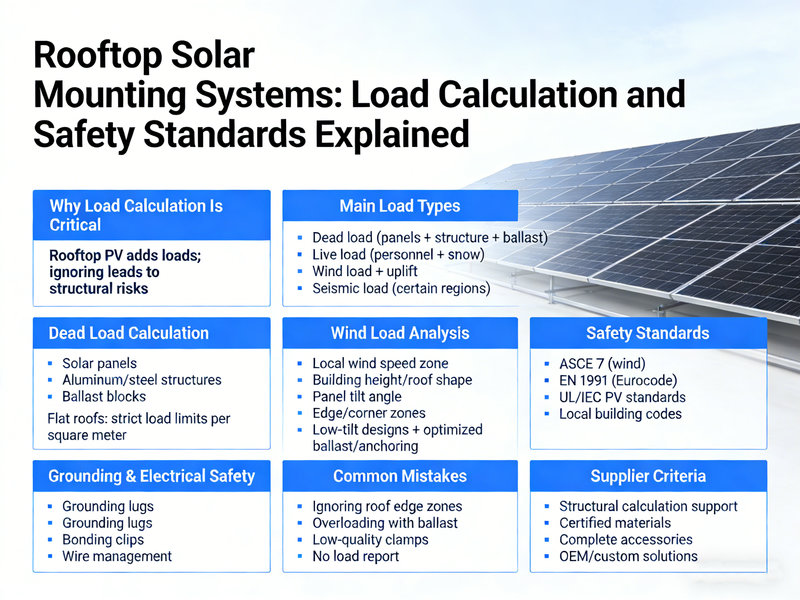
Safety is the foundation of any rooftop solar project. No matter how efficient the solar panels are, an improperly designed rooftop solar mounting system can create serious structural risks, safety hazards, and legal issues.
This article explains load calculation principles and safety standards for rooftop solar mounting systems in a clear, engineering-focused way.
Why Load Calculation Is Critical for Rooftop Solar Systems
Rooftop PV systems add additional loads to existing buildings. If load calculation is ignored or underestimated, problems will appear sooner or later — usually sooner.
Main load types include:
-
Dead load (mounting structure + solar panels)
-
Live load (maintenance personnel, snow)
-
Wind load and uplift force
-
Seismic load (in some regions)
A good design always starts with numbers, not assumptions.
Dead Load Calculation for Solar Mounting Systems
Dead load includes:
-
Solar panels
-
Aluminum or steel mounting structures
-
Ballast blocks (if used)
Flat roof commercial buildings often have strict load limits. Designers must ensure the total system weight per square meter stays within acceptable limits, otherwise the roof structure may fail.
This part is boring but very important.
Wind Load and Uplift Force Analysis
Wind is the biggest risk factor for rooftop solar mounting systems.
Designers must consider:
-
Local wind speed zone
-
Building height and roof shape
-
Panel tilt angle
-
Edge and corner zones
Higher tilt angles usually mean higher wind uplift forces. That’s why many commercial rooftop systems use low-tilt designs combined with optimized ballast or anchoring.
International Safety Standards for Rooftop Solar Mounting
Most commercial PV projects must comply with international or regional standards, such as:
-
ASCE 7 (Wind load calculation)
-
EN 1991 (Eurocode)
-
UL and IEC related PV standards
-
Local building codes
A professional solar mounting system supplier should design products according to these standards and provide test reports or calculation references.
Grounding and Electrical Safety Requirements
Mechanical safety alone is not enough. Rooftop solar mounting systems must also ensure electrical safety.
Key elements include:
-
Grounding lugs
-
Bonding clips
-
Proper wire management with wire clips
Good grounding design protects both equipment and people — and inspectors really care about this part.
Common Mistakes in Rooftop Solar Mounting Design
Some common issues seen in real projects:
-
Ignoring roof edge wind zones
-
Overloading roofs with excessive ballast
-
Using low-quality clamps or fasteners
-
No professional load calculation report
These mistakes are avoidable if the project is designed properly from the beginning.
Choosing a Reliable Solar Mounting System Supplier
For rooftop PV projects, a reliable China solar mounting system manufacturer should offer:
-
Structural calculation support
-
Certified materials
-
Complete mounting accessories
-
OEM and customized solutions
This is not just about selling brackets — it’s about delivering safe systems.
Final Thoughts
Rooftop solar mounting systems must be designed with accurate load calculations and strict safety standards. From dead load to wind uplift and grounding design, every detail matters.
Working with an experienced solar mounting system supplier and manufacturer ensures your rooftop PV project is safe, compliant, and built to last for decades.